
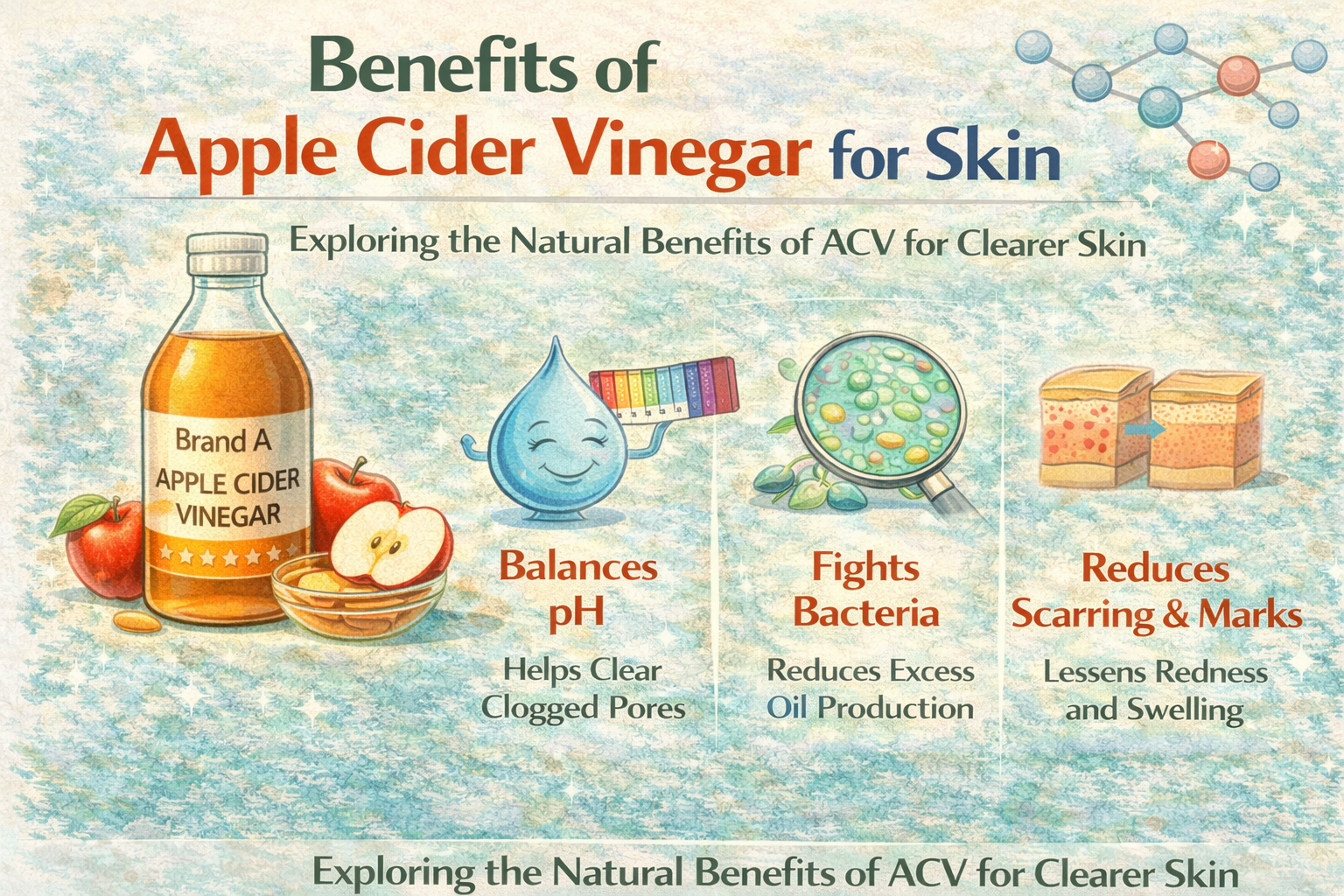
Apple cider vinegar (ACV) has been a staple in home remedy circles for decades, and its popularity in skincare continues to grow. From DIY toners to acne spot treatments, people swear by this fermented liquid for everything from balancing oily skin to managing breakouts.
But here’s the thing: not every claim holds up under scrutiny, and using ACV incorrectly can actually damage your skin. This guide breaks down what research shows about apple cider vinegar benefits for skin, how to use it safely, and when you should skip it entirely.
Key Apple Cider Vinegar Benefits for Skin (Quick Overview)
When used properly diluted, topical apple cider vinegar may offer gentle cleansing, mild exfoliation, and pH support for certain skin types. Most people use it as a diluted toner, in baths or soaks, or as an occasional spot treatment for blemishes.
Here’s a quick summary of the main science-linked benefits:
- Gentle cleansing and exfoliation – Organic acids help loosen dead skin cells and remove excess oil
- Balancing skin pH – Can help restore the skin’s natural acidic mantle after washing with alkaline soaps
- Supporting acne management – Antimicrobial properties may help reduce bacteria associated with breakouts
- Helping control certain infections and foot odor – Antifungal and antibacterial properties show promise for minor issues
- Potential help with scalp issues – May reduce flaking and buildup when used as a rinse
- Limited clinical evidence – Most benefits come from small studies or lab research, not large trials
Keep in mind that benefits are mostly seen with diluted topical use. If you have sensitive skin or damaged skin from conditions like eczema or rosacea, you’ll need extra caution, or should avoid ACV altogether.
Most evidence comes from small studies and lab research on acetic acid, not large clinical trials specifically testing cider vinegar products. As you’ll see in the Cleanses and Exfoliates section below, proper dilution is everything.
How Apple Cider Vinegar Works on Skin
Apple cider vinegar is made through a two-step fermentation process that converts apple juice into alcohol, then into acetic acid. The final product contains acetic acid as its primary active component, along with malic acid, polyphenols, and, in raw, unfiltered versions, live bacteria and proteins known as “the mother.”
Typical store-bought ACV contains approximately 4–6% acetic acid with a pH around 2–3. Compare this to healthy skin, which maintains a pH of roughly 4.7–5.5. This significant difference explains why dilution is critical before applying ACV to your skin.
Key Components
- Acetic acid – Provides antimicrobial and antifungal action by lowering pH and disrupting bacterial cell membranes
- Malic acid – Functions as a mild alpha-hydroxy acid (AHA) that promotes gentle exfoliation
- Polyphenols and antioxidants – May help reduce oxidative stress, though topical benefits are less proven
- pH modulation – A slightly acidic skin surface supports barrier function and healthy microbiome balance
Potential Downsides
- Over-acidifying the skin can cause irritation, barrier damage, and worsen existing conditions
Raw, unfiltered organic apple cider vinegar with the mother is popular for DIY skincare. However, purity and concentration are less controlled than in lab-formulated products, which adds variability to results and safety.
Cleanses and Exfoliates
Diluted ACV can serve as a cleanser or rinse to remove oil, sweat, and product build-up without the harsh surfactants found in many commercial products. Its natural acidity cuts through residue while its organic acids provide mild chemical exfoliation.
The AHAs in apple cider, especially malic acid, gently loosen dead skin cells from the skin’s surface. This makes ACV a simple, affordable chemical exfoliant for both face and body when used correctly.
- Typical dilution ratios range from 1:4 to 1:10 (ACV to water), applied with a cotton pad or soft cloth
- Frequency should be once a day at most, or just a few times per week for most people
- Problem areas like the back, chest, and shoulders benefit from this rinse since thicker skin tolerates it better
- Watch for signs of over-use including tightness, stinging, or peeling, especially around thin skin like the eye contour or neck
Many people find ACV rinses helpful for areas prone to clogged pores. It’s an affordable alternative to commercial exfoliating cleansers, though results will vary depending on your skin type and the consistency of your dilution.
Tones Skin and Balances pH
Toners and astringents help refresh the skin after cleansing, and an apple cider vinegar toner has become a popular DIY option for those seeking natural ingredients.
Washing your face with alkaline soaps can temporarily raise skin pH, which may increase dryness and irritation. Research shows that maintaining the skin’s natural acidic environment helps with barrier function and keeps the microbiome balanced. Diluted ACV can help restore this pH balance after cleansing.
Benefits of Using ACV as a Toner
- Mild astringent effect – Creates temporary tightening of pores and smoothing of texture
- Prep for other products – Balances pH before applying serums, moisturizers, or makeup
- Cost-effective – Much cheaper than many commercial toners
Dilution Guidelines
|
Skin Type |
Dilution Ratio |
Notes |
|---|---|---|
|
Normal/Oily |
1:5 to 1:10 |
Start weaker, increase slowly |
|
Sensitive |
1:15 or weaker |
Proceed with extreme caution |
|
Dry |
1:10 or skip |
May worsen dryness |
Apply your ACV toner with a cotton pad or spray bottle after cleansing, avoiding the eye area. Fragrance-free, alcohol-free commercial formulas may be better tolerated than DIY versions with added essential oils, especially for reactive skin.

Helps Manage Acne and Blemishes
Acne vulgaris develops when pores become clogged with excess sebum, dead skin cells accumulate, and bacteria like Cutibacterium acnes multiply and trigger inflammation. ACV may help address several of these factors.
How ACV May Help Acne
- Antibacterial action: Lab studies show acetic acid can inhibit acne-related bacteria and disrupt biofilms on skin
- Mild exfoliation: The AHA content helps prevent clogged pores, potentially reducing blackhead and whitehead formation over time
- pH restoration: Maintaining acidic skin pH discourages bacterial overgrowth
For acne management, you can use diluted ACV as a toner or as a spot treatment. Apply the diluted solution to individual pimples with a cotton swab, staying away from open cuts or severely inflamed lesions.
However, ACV should not replace evidence-based acne treatments like benzoyl peroxide, adapalene, or prescription retinoids for moderate to severe acne. One dermatologist noted that “when acetic acid is used topically, it clears bacteria-related infections of the skin,” but emphasized that acne is multifactorial and requires comprehensive treatment.
Online skincare communities frequently report success with diluted ACV for fungal acne and mild to moderate breakouts. These anecdotal reports are encouraging but don’t constitute controlled studies. Researchers found limited clinical data specifically testing ACV for acne outcomes.
Soothes and Supports Certain Skin Conditions
People often use diluted ACV as a home remedy for various skin conditions, but results and safety vary widely depending on the specific condition and how the vinegar is applied.
ACV for Skin Conditions
- ACV baths: typically 1–2 cups added to a full lukewarm tub—are sometimes used for mild body itch, dry patches, or general skin discomfort. The acidity may help reinforce the skin barrier and reduce colonization by certain microbes.
For atopic dermatitis specifically, one small study from the University of Virginia examined 0.5% ACV soaks on forearms over 14 days. The results showed no significant difference in skin bacterial microbiome compared to plain water, and no reduction in Staphylococcus aureus abundance. This suggests that at least at low concentrations, ACV may not dramatically alter skin flora in eczema patients.
Important Cautions for Skin Condition Use
- Broken or inflamed skin: Applying ACV directly can cause burning and worsen irritation
- Rosacea and very reactive skin: Usually advised to avoid ACV on the face entirely, as low pH can trigger flushing and stinging
- Psoriasis: Proceed with extreme caution; ACV may irritate plaques
Consulting a dermatologist before using ACV soaks or compresses on chronic inflammatory conditions is strongly recommended. What works as a home remedy for one person may cause more harm than good for another.
Helps Heal Minor Infections, Scalp, and Foot Odor
ACV’s antifungal and antimicrobial properties make it a popular home remedy for minor skin and scalp issues. Medical literature supports acetic acid’s antibacterial action, particularly against gram-negative bacteria like Pseudomonas aeruginosa, which is relevant for wound healing and certain nail infections.
ACV for Feet and Fungal Issues
- Athlete’s foot and similar problems: Diluted ACV soaks may help based on small studies with acetic acid solutions
- Foot odor: ACV foot baths (1 part ACV to 2–4 parts warm water, 10–20 minutes) may reduce odor linked to bacteria and fungi between toes
- Nail infections: Some people use soaks for bacterial infections causing greenish discoloration
ACV for Scalp Uses
- Dandruff and flaking: A 1:1 or weaker ACV-to-water mix applied a few times weekly may reduce itch and buildup
- Mild scalp psoriasis: Some report improvement, though irritation is possible
- Shiny hair: ACV’s acidity may smooth the hair cuticle, leaving hair shinier after rinsing
Suspected serious infections, spreading rashes, or painful scalp lesions require medical treatment. ACV should only serve as an adjunct, not a primary therapy for fungal infections or any condition that isn’t improving.
Application Methods and How to Use ACV Safely
Full-strength, undiluted ACV should almost never be applied directly to skin. The risk of chemical burns and barrier damage is real and well-documented in case reports of patients who experienced blistering after applying neat ACV to their faces or lesions.
General Dilution Guidelines
|
Application |
Starting Dilution |
Notes |
|---|---|---|
|
Rinse/cleanser |
1 tbsp per cup water |
Short contact, then rinse |
|
Toner |
1 tsp per cup water |
Leave-on, start very weak |
|
Soak/bath |
1–2 cups per full tub |
Very diluted |
|
Spot treatment |
1:3 ACV to water |
Small area only |
Common formats for using skin ACV include:
- Cleanser/rinse – Short contact time, then rinse thoroughly
- Toner – Leave-on at low strength
- Soak – Diluted in bath or basin
- Spot treatment – Very small area with limited contact time
Use cotton pads, soft washcloths, or a spray bottle for application. Always avoid the eye area, mucous membranes, and open wounds.
Commercial products like organic ACV toner pads with tea tree oil, witch hazel, and botanical extracts are often buffered and safer than DIY mixes. If you prefer natural oils in your formulations, ensure essential oils are properly diluted.
Introduce ACV only one way at a time, start with a toner before trying soaks, so you can more easily identify irritation triggers.
Cleanser or Rinse
To create a simple ACV rinse:
- Mix 1 tablespoon ACV with 1 cup lukewarm water.
- Use after your regular gentle face wash.
- Apply to skin and leave for 30–60 seconds.
- Rinse off completely with plain water.
- Pat skin dry gently.
This method works best for normal to oily, non-sensitive skin. Limit use to once daily or a few times per week to avoid over-exfoliation and remove dead skin cells without irritation.
For body use, this rinse works well on the back, chest, or shoulders where thicker skin and body acne may benefit from extra degreasing. After washing and rinsing, apply a bland, fragrance-free moisturizer to replenish natural oils.
Soaks and Baths
For a full-body soak:
- Fill tub with lukewarm (not hot) water.
- Add 1–2 cups of ACV.
- Soak for 10–15 minutes.
- Rinse with clean water afterward.
- Apply moisturizer immediately while skin is still damp.
For localized soaks (hands, feet, or patches):
- Combine 1 part ACV with 2–4 parts water in a basin.
- Soak affected area for 5–15 minutes.
- Rinse thoroughly and dry.
Avoid hot water, which can strip oils and exacerbate dryness. Limit ACV baths or soaks to a few times per week, and monitor your skin for dryness, redness, or stinging between sessions.
Toner
For a basic DIY toner:
- Start with 1 teaspoon ACV in 1 cup distilled or cooled boiled water.
- Increase strength slowly only if skin tolerates it well.
- Apply with a cotton pad or fine mist spray after cleansing.
- Avoid eye area and any broken skin.
- Follow with serums or moisturizers.
Use once a day at most, preferably in the evening when starting out. Commercial ACV toners often blend vinegar with soothing ingredients like aloe, rose water, witch hazel, or niacinamide to buffer acidity and reduce the chance of irritation.
Blemish and Spot Treatment
Spot treatments use a stronger concentration than toners but target only individual pimples:
- Dilute ACV at approximately 1:3 (ACV to water).
- Dip a cotton swab in the solution.
- Dab onto a single blemish.
- Leave on for 5–10 minutes initially before rinsing.
- Gradually increase contact time if tolerated.
Never use ACV on cystic, open, or scabbed acne lesions—this can cause significant burning, pain, and delayed healing. Combine ACV spot treating with non-comedogenic moisturizers and proven active ingredients like salicylic acid for more comprehensive skin care.
Dealing With the Strong ACV Smell
Let’s be honest: the vinegary smell is strong and can linger, which turns many people off from regular use.
Strategies to Manage the Odor
- Use higher dilutions: More water means less smell
- Rinse thoroughly: Don’t let residue sit on skin
- Apply at night: Give the smell time to dissipate before morning
- Choose commercial products: Many add subtle botanical fragrances (rose, lavender, citrus) to mask odor
If you add essential oils to DIY formulas, always dilute them properly in a carrier oil first. Avoid heavy fragrance when skin is already irritated, as this can compound sensitivity issues.
Drinking ACV vs. Using It on Skin
There’s an important distinction between topical apple cider vinegar for skin and oral ACV consumption for overall health. Many people take ACV shots, gummies, or capsules hoping for systemic benefits.
Potential Benefits of Drinking ACV
Current research suggests oral ACV may modestly support:
- Blood sugar control when taken with meals
- Cholesterol levels in some individuals
- Digestive function through gastric acid support
Any skin benefits from drinking ACV are indirect, working through metabolic health and reduced systemic inflammation rather than targeted local effects. The gut-skin axis is a real area of research, but direct evidence connecting ACV consumption to clearer skin is limited.
Most experts prefer liquid ACV (1 tablespoon diluted in 8–10 ounces of water) over pills or gummies due to better evidence and fewer additives. However, be aware of potential tooth enamel erosion from regular acidic drinks—use a straw and rinse your mouth afterward.
Cautions for Oral ACV
- Possible interactions with diabetes medications
- May affect diuretic drugs
- Can cause esophageal irritation if taken undiluted
- Consult a healthcare provider before starting daily ACV supplementation
Who Should Avoid ACV on Skin and Potential Side Effects
ACV is not risk-free. Chemical burns have been documented when people applied directly or used undiluted ACV on their skin, particularly on the face or delicate areas.
Common Side Effects
|
Side Effect |
Description |
|---|---|
|
Stinging and burning |
Sensation of discomfort or pain |
|
Redness and inflammation |
Skin appears red and swollen |
|
Peeling and flaking |
Skin may shed or become scaly |
|
Increased sun sensitivity |
Skin may burn more easily |
|
Worsening dryness |
Skin may feel tight and dry |
|
Contact dermatitis |
Allergic or irritant reaction |
Higher-Risk Groups
|
Group |
Recommendation |
|---|---|
|
Very dry or sensitive skin |
Avoid or use very weak dilutions |
|
Active eczema or psoriasis |
Consult dermatologist first |
|
Rosacea |
Generally avoid on face |
|
Children |
Not recommended |
|
Open wounds or compromised barrier |
Do not apply |
Using ACV too often on the face can disrupt the lipid barrier, potentially making acne, irritation, or hyperpigmentation worse. If you experienced irritation with other acids or harsh soaps, you’re more likely to react to ACV as well.
What to Do If Burning Occurs
- Immediately rinse with plenty of cool water.
- Apply a bland, fragrance-free moisturizer.
- Seek medical help if blistering, severe pain, or extensive burns appear.
Remember: “natural” does not equal “gentle.” Patch testing and dilution are essential steps for any new skincare product.
Patch Testing Before Use
Before applying ACV to your face or larger body areas, always perform a patch test:
- Dilute ACV exactly as you plan to use it.
- Apply a small amount to your inner forearm or behind your ear.
- Leave on for 15–20 minutes.
- Gently rinse.
- Monitor the test area for 24–48 hours.
Watch for signs of delayed irritation including redness, swelling, itching, or rash. If any adverse reaction appears on the test site, do not use ACV on your face or sensitive areas.
People with a history of contact dermatitis or multiple product sensitivities should consult a dermatologist before experimenting with ACV skin care products. A small amount of precaution can prevent significant discomfort.
Summary of Apple Cider Vinegar Skin Benefits
- Apple cider vinegar offers potential benefits for healthy skin through pH balancing, mild exfoliation, and antimicrobial properties.
- Always dilute ACV before topical use—undiluted application can cause chemical burns.
- Benefits are supported by small studies and mechanistic research, not large clinical trials.
- Sensitive skin, eczema, rosacea, and broken skin require extra caution or complete avoidance.
- Start with weaker dilutions and patch test before regular use.
- Commercial ACV products are often safer than DIY formulations.
- Drinking ACV offers different, indirect benefits compared to topical application.
Conclusion
Apple cider vinegar can be a useful addition to your skin care routine when used with proper dilution and realistic expectations. Its acetic acid content provides genuine antimicrobial and exfoliating properties, while its ability to restore skin pH makes it appealing as a natural toner alternative.
However, mixed opinions among dermatologists and the lack of large-scale clinical trials mean you shouldn’t expect miracle results. The evidence we have comes primarily from acetic acid research and one small study on atopic dermatitis that showed limited effects.
Start with the gentlest approach, weak dilutions, patch testing, and infrequent application. Monitor how your skin responds before increasing strength or frequency. And if you have any chronic skin condition or a history of sensitivity, consulting a dermatologist before adding ACV to your routine is the smartest move you can make.
ClearB5: A Comprehensive Supplement for Acne Support
For those seeking a convenient and effective way to incorporate vitiamins and minerals for skin support, ClearB5 offers a well-rounded supplement designed specifically for acne-prone skin. It combines key ingredients such as vitamin B5 (pantothenic acid), zinc, vitamin C, vitamin B3, and other essential nutrients that support skin health, reduce inflammation, and promote hormonal balance.
ClearB5 is formulated to provide a complete vitamin supplement approach, making it an excellent option for acne patients looking to complement their skincare routine with oral supplementation. By addressing multiple factors involved in acne pathogenesis, including oil production, skin cell turnover, and immunce function, ClearB5 can be a valuable addition to a comprehensive acne management plan.
- Learn more about if peanut butter causes acne
- Learn more about does creatine cause pimples
Medical Disclaimer
This article is for informational purposes only and does not substitute professional medical advice. Always consult a qualified healthcare provider before starting supplements or changing medical treatment. These statements have not been evaluated by the Food and Drug Administration. This product is not intended to diagnose, treat, cure, or prevent any disease.


