
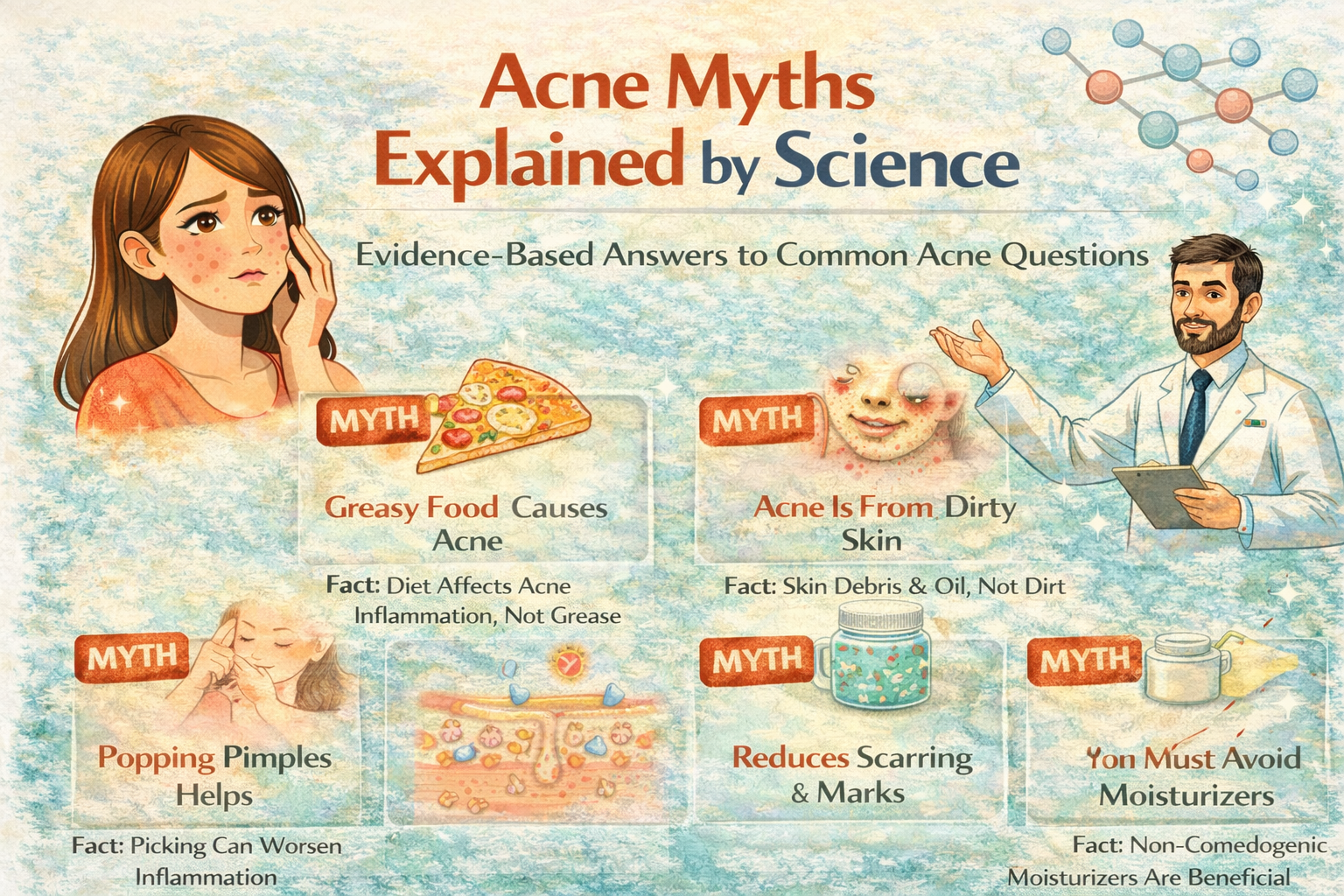
Acne is one of the most misunderstood skin conditions in the world. There are many myths about acne that persist despite scientific advances. This article explores the science behind acne myths, breaking down the most common misconceptions and what research actually says about acne. This article is for anyone struggling with acne or seeking evidence-based skincare advice. Dispelling these myths can help you avoid ineffective treatments and focus on what truly works. Despite decades of dermatology research, myths about acne continue to circulate online, in families, and across social media. Many of these beliefs lead people to over-cleanse, restrict foods unnecessarily, misuse supplements, or blame themselves for breakouts. This article breaks down the most common acne myths, explains what science actually says about acne, and provides clear, practical guidance for healthier skin based on evidence, not fear.
Key Takeaways
- Acne is not caused by dirt, poor hygiene, or laziness.
- Over-washing and harsh treatments often worsen acne.
- Diet can influence acne for some people, but not universally.
- Supplements can support skin health, but they do not “cure” acne.
- Detoxes, cleanses, and extreme routines lack evidence.
- Acne inflammation, not surface oil, is the real driver of breakouts.
- Consistent, gentle care works better than aggressive fixes.
Now, let's look at what science actually tells us about acne.
Acne Science Explained (Plain English)
How pimples actually form
Acne begins inside the pore, not on the surface. Each pore contains a hair follicle and oil gland. Acne develops when four factors overlap:
- Excess sebum production
- Abnormal shedding of skin cells
- Growth of Cutibacterium acnes bacteria
- Inflammation
Sebum is the natural oil produced by your skin. When too much sebum is produced, it can mix with dead skin cells and clog pores. Cell turnover refers to the process by which your skin naturally sheds old cells and replaces them with new ones. When this process is abnormal, it can contribute to clogged pores. The growth of Cutibacterium acnes (a type of bacteria naturally found on the skin) in these clogged pores can trigger inflammation, which is the body's immune response to perceived threats.
Why inflammation matters
Inflammation is what turns a clogged pore into a red, swollen pimple. Most acne myths focus on oil or dirt, but acne inflammation is the true driver of visible breakouts. Systemic inflammation refers to inflammation that affects the entire body, not just the skin, and can influence acne severity.
Why Acne Myths Are So Persistent
Acne myths persist because acne is visible, emotional, and deeply tied to identity. People want quick answers and simple villains. Social media rewards dramatic before-and-after stories. Outdated advice gets passed down as fact. When acne improves coincidentally, the last thing tried often gets the credit, even if it had nothing to do with the improvement.
Science moves slowly. Myths move fast.
To understand why these myths are so persistent, it's important to first understand how acne really develops.
Acne Myths: What Science Really Says
Below is a quick reference table summarizing the most common acne myths, their verdict, and the scientific explanation. Detailed explanations for each myth follow.
Acne Myths vs. Science: Quick Reference
|
Myth |
Verdict |
Why |
|---|---|---|
|
Acne = dirty skin |
False |
Inflammation, not dirt, drives acne |
|
More washing helps |
False |
Over-washing damages the skin barrier and worsens acne |
|
Sweat causes acne |
False |
Only trapped sweat or friction can contribute to irritation |
|
Wearing makeup always causes acne |
False |
Non-comedogenic makeup is formulated not to clog pores |
|
Greasy foods cause acne |
False |
Dietary fat does not directly cause acne; refined carbs may matter |
|
Chocolate causes acne |
False |
No direct link; sugar and dairy content may be more relevant |
|
Dairy always causes acne |
False |
Only some people are sensitive; evidence is not universal |
|
Supplements cure acne |
False |
Supplements support skin health but do not cure acne |
|
Detoxes and cleanses clear acne |
False |
The body detoxifies itself; no evidence for detoxes |
|
Skin purging means it’s working |
False |
Purging only occurs with certain treatments; often it's irritation |
|
Popping pimples makes them heal faster |
False |
Increases inflammation, infection, and scarring risk |
|
Acne scarring always happens |
False |
Not all acne scars; early treatment reduces risk |
|
Accutane permanently cures acne |
False |
Isotretinoin (Accutane) can induce remission, but relapse is possible |
|
Acne goes away on its own with age |
False |
Adult acne is common; age alone does not resolve acne |
Detailed Acne Myths Science: Explanations
Myth 1: “Acne Means Your Skin Is Dirty”
What people think: Breakouts mean the skin is not clean enough.
What the science says: Acne is not caused by dirt. In fact, acne-prone skin is often over-cleaned. Washing too much strips the skin barrier, increases irritation, and triggers more oil production.
Practical takeaway: Clean skin gently, not aggressively. As part of a gentle skincare routine, use a mild cleanser to wash your face, which helps prevent irritation and dryness. Clean does not mean scrubbed raw. Harsh products or over-washing can cause skin irritation, which may worsen acne.
Myth 2: “Washing Your Face More Clears Acne Faster”
Over-washing disrupts the skin barrier and worsens inflammation. Most dermatologists recommend cleansing twice daily, not more.
Myth 3: “Sweating Causes Acne”
Sweat does not cause acne. Problems arise when sweat is trapped against the skin for long periods or mixed with friction and occlusive products.
Myth 4: “Wearing Makeup Always Causes Acne”
Modern non-comedogenic makeup does not inherently cause acne. Non-comedogenic means a product is formulated not to clog pores. However, improper removal of makeup can lead to clogged pores, which contribute to acne. Poor removal, heavy occlusives, or expired products are the issue.
Myth 5: “Greasy Foods Cause Acne”
Eating oily foods does not directly increase skin oil. Studies suggest that diets high in refined carbs, such as white bread and sugary snacks, may exacerbate acne in some individuals. Acne is influenced by hormones and inflammation, not dietary fat sitting on the skin.
Myth 6: “Chocolate Causes Acne”
Evidence does not support a direct link between chocolate consumption and acne. Sugar and dairy content may matter more than cocoa itself.
Myth 7: “Dairy Always Causes Acne”
Dairy is associated with acne in some people, especially skim milk, but not everyone. Studies suggest that sensitivity varies, and while some research links dairy intake to increased breakouts, the evidence is not conclusive for all individuals.
Myth 8: “Supplements Cure Acne”
Supplements can support skin health, but they do not cure acne.
- Zinc: Supports inflammation control.
- Vitamin B5: Supports sebum metabolism.
- Omega-3s: Reduce systemic inflammation (inflammation throughout the body, not just the skin).
Megadosing supplements can worsen acne or cause side effects. Products like ClearB5 are positioned as supportive nutrition, not medical treatment.
Myth 9: “Detoxes and Cleanses Clear Acne”
The body already detoxifies via the liver and kidneys. Acne detox myths are unsupported and often harmful.
Myth 10: “Skin Purging Means It’s Working”
Purging occurs only with specific treatments that increase cell turnover (the process by which skin sheds old cells and generates new ones) and follows predictable timelines. Many reactions labeled as purging are actually irritation.
Myth 11: “Popping Pimples Makes Them Heal Faster”
Popping increases inflammation and infection risk by pushing bacteria and debris deeper into the skin, which can also increase the risk of potential scarring.
Myth 12: “Acne Scarring Always Happens”
Not all acne leads to scarring. However, untreated severe acne can result in permanent scarring, where marks remain even after the acne clears. Early inflammation control is especially important for severe acne to reduce the risk of permanent scarring.
Myth 13: “Accutane Permanently Cures Acne”
Isotretinoin, commonly known by the brand name Accutane, is a prescription oral medication for severe acne. Isotretinoin can induce long-term remission but does not guarantee permanent cure. Accutane is one of several oral medications used to treat severe acne, and other oral medications may include antibiotics or hormonal therapies. Relapse occurs in a subset of patients.
Myth 14: “Acne Goes Away on Its Own With Age”
Adult acne is common in the 20s, 30s, and 40s. Age alone does not resolve acne. Hormonal imbalances and fluctuations in hormone levels are common causes of adult acne, affecting both men and women. In some cases, hormonal treatments, such as oral contraceptives or other medications, may be recommended by a dermatologist to help manage persistent or hormonally-driven acne.
Mental Health and Acne
Mental Health Impact
Acne can negatively impact self-esteem and emotional well-being, especially in teenagers. Acne myths fuel shame. Acne is not a personal failure. Evidence-based care reduces both breakouts and self-blame.
The Cycle of Stress and Acne
Acne stress can worsen breakouts by affecting hormone levels, creating a cycle that impacts both skin and mental health.
What Actually Helps Acne
Gentle cleansing
Gentle cleansing is a key part of any acne treatment routine. Using a mild cleanser helps remove excess oil, dirt, and makeup without irritating the skin or exacerbating acne. Over-washing or using harsh scrubs can actually worsen breakouts and damage your skin barrier, so stick to gentle, twice-daily cleansing.
Anti-inflammatory ingredients
Effective acne treatments often include active ingredients such as benzoyl peroxide and salicylic acid. These ingredients help reduce inflammation, unclog pores, and target acne-causing bacteria. However, it's important to use the correct amount and follow product instructions to avoid irritation. For some, only topical treatments may not be sufficient, especially in severe cases. Oral medications, including oral contraceptives, may be recommended by a dermatologist to help treat acne and regulate hormones.
Consistent routines
Consistency is crucial for achieving clear skin and preventing breakouts. Following a daily skincare routine tailored to your skin type and severity of acne can make a significant difference. Remember, some practices or overuse of products can exacerbate acne, so patience and moderation are key. Treat acne early to avoid complications and scarring.
Stress management
Managing stress is important, as high stress levels can exacerbate acne and trigger breakouts. Incorporate stress-reducing activities like exercise, meditation, or hobbies into your daily routine to support your skin's health.
Supportive nutrition
A balanced diet rich in vitamins and minerals supports overall skin wellness. While no single food directly causes or cures acne, certain dietary habits may exacerbate acne in some individuals. Focus on whole foods, stay hydrated, and consider supplements like ClearB5 as part of a comprehensive approach.
For the most effective acne treatments, seek professional help and professional advice from a dermatologist. They can assess your skin type and severity, and develop a personalized treatment plan that may include both topical and oral options. This comprehensive approach helps you treat acne effectively, prevent breakouts, and work toward the goal of clear skin.
References
- Zaenglein et al., Journal of the American Academy of Dermatology
- Thiboutot et al., Journal of Investigative Dermatology
- Draelos et al., Dermatologic Surgery
- NIH Office of Dietary Supplements
- American Academy of Dermatology Guidelines
ClearB5: A Comprehensive Supplement for Acne Support
For those seeking a convenient and effective way to incorporate vitiamins and minerals for skin support, ClearB5 offers a well-rounded supplement designed specifically for acne-prone skin. It combines key ingredients such as vitamin B5 (pantothenic acid), zinc, vitamin C, vitamin B3, and other essential nutrients that support skin health, reduce inflammation, and promote hormonal balance.
ClearB5 is formulated to provide a complete vitamin supplement approach, making it an excellent option for acne patients looking to complement their skincare routine with oral supplementation. By addressing multiple factors involved in acne pathogenesis, including oil production, skin cell turnover, and immunce function, ClearB5 can be a valuable addition to a comprehensive acne management plan.
- Learn more about vitamin deficiencies linked to acne
- Learn more about gut health and acne
Medical Disclaimer
This article is for informational purposes only and does not substitute professional medical advice. Always consult a qualified healthcare provider before starting supplements or changing medical treatment. These statements have not been evaluated by the Food and Drug Administration. This product is not intended to diagnose, treat, cure, or prevent any disease.


