
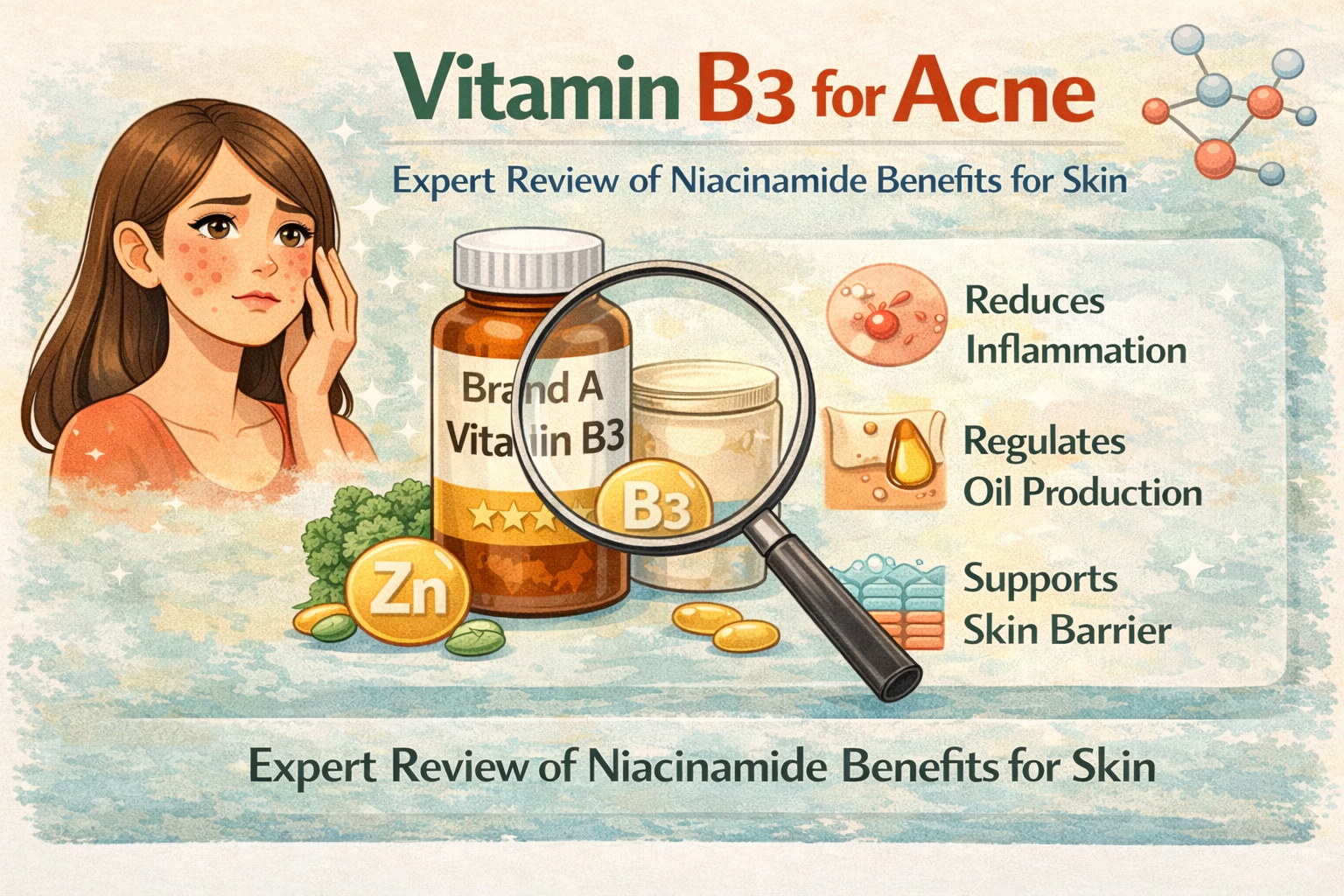
Vitamin B3 has become a cornerstone ingredient in acne research and modern skincare. As a notable component in acne treatment regimens, vitamin B3, especially in the form of niacinamide, is widely used in both topical and oral formulations for its ability to reduce inflammation, minimize pores, and address post-acne discoloration. From topical niacinamide serums to internal vitamin B3 complexes, interest in vitamin B3 acne solutions continues to grow, especially among adults with oily or inflammation-prone skin. But how does vitamin B3 actually affect acne, which form matters most, and can it be used safely both topically and internally? This evidence-based guide breaks down what vitamin B3 is, how it works on acne-prone skin, the difference between niacin and niacinamide, and what clinical research really shows, so you can make informed, realistic decisions.
This guide is for anyone struggling with acne, from teens to adults, and for those interested in evidence-based skincare solutions.
Quick Summary for Vitamin B3 for Acne
- Vitamin B3, especially niacinamide, has strong evidence for reducing inflammation, regulating oil, and supporting the skin barrier in acne-prone skin, and offers many benefits for skin health, including specific skin care benefits such as improved hydration, reduced inflammation, and enhanced skin barrier function.
- Topical niacinamide is one of the most researched and well-tolerated acne ingredients.
- Oral vitamin B3 plays a role in overall skin health but requires caution with dosage and form.
- Vitamin B3 supports acne management, it does not cure acne or replace medical treatment.
What Is Vitamin B3?
Vitamin B3 is a water-soluble vitamin essential for cellular energy production, DNA repair, and inflammatory regulation. It exists in several forms, each with different properties relevant to skin health. Both niacin and niacinamide are forms of vitamin B3, but only niacinamide is recommended for skin care due to its favorable side effect profile.
Forms of vitamin B3
- Niacin (nicotinic acid)
- Niacinamide (nicotinamide)
- Nicotinamide riboside (primarily studied for aging and metabolism)
- Vitamin B3 complex supplements that include supporting B vitamins
In dermatology and acne research, niacinamide is the most relevant form due to its anti-inflammatory and barrier-supporting properties without the flushing side effects associated with niacin.
Now that we've covered the basics of vitamin B3, let's explore how it works on acne-prone skin.
How Vitamin B3 Works on Skin and Acne
Acne is not just clogged pores. It is an inflammatory skin condition influenced by oil production, immune response, and skin barrier integrity. Vitamin B3 affects several of these pathways at once, and can help reduce swelling and redness associated with acne.
By addressing inflammation, oil production, and barrier integrity, vitamin B3 can improve overall skin appearance.
Anti-inflammatory effects
Niacinamide inhibits inflammatory mediators such as IL-8 and reduces neutrophil activity in the skin. This helps calm redness and inflammatory acne lesions [1].
Sebum regulation
Clinical studies show niacinamide can reduce sebum excretion rates, making it particularly useful for oily skin types [2].
Skin barrier repair
Niacinamide supports a healthy skin barrier, which is essential for preventing irritation and maintaining balanced skin. It increases ceramide synthesis, strengthening the skin barrier. A healthier barrier reduces irritation and improves tolerance to other acne treatments [3].
Keratinocyte regulation
Vitamin B3 supports normal keratinocyte differentiation, helping prevent abnormal follicular plugging that contributes to acne.
With an understanding of how vitamin B3 works on the skin, it's important to distinguish between its different forms and their relevance to acne.
Niacin vs Niacinamide, Why the Difference Matters for Acne
Understanding the difference between niacin and niacinamide is critical.
Niacin (nicotinic acid)
Niacin improves lipid metabolism and circulation but commonly causes niacin flush, a warmth and redness reaction due to vasodilation. This makes niacin unsuitable for topical acne use and less practical for acne-focused supplementation.
Niacinamide (nicotinamide)
Niacinamide does not cause flushing and is well tolerated both topically and orally at appropriate doses. Nearly all acne-related research focuses on niacinamide rather than niacin.
Bottom line: When people search niacin vs niacinamide acne, niacinamide is almost always the preferred option.
Now that you know which form of vitamin B3 is best for acne, let's look at how to use it topically for the best results.
Topical Niacinamide for Acne, Evidence and Best Concentrations
Topical niacinamide is one of the most studied non-prescription acne ingredients. Niacinamide is found in a variety of skin care products, including creams, serums, and moisturizers, and is often combined with other ingredients such as vitamin C or hyaluronic acid to enhance its effects. In addition to serums, niacinamide is included in other skin care products like cleansers and sunscreens, offering a multifaceted approach to improving skin health and addressing concerns such as acne, hyperpigmentation, and inflammation.
Clinical evidence
- A randomized controlled trial comparing 4 percent niacinamide gel to 1 percent clindamycin found comparable improvement in inflammatory acne lesions over 8 weeks [4].
- Additional studies show niacinamide improves oiliness, redness, and barrier function [2][3].
Recommended concentrations
- 2 to 5 percent: Well supported for acne, oil control, and sensitivity
- 10 percent: Common in commercial products, may be effective but increases irritation risk
Higher concentrations are not necessarily better and may increase dryness or flushing sensations.
Benefits for acne-prone skin
- Reduces redness and inflammation
- Helps regulate oil production
- Improves tolerance of retinoids (vitamin A derivatives used for acne and anti-aging) and exfoliants (ingredients that help remove dead skin cells)
- Minimizes the appearance of visible pores, contributing to smoother-looking skin
With topical use covered, let's move on to the role of oral niacinamide and how it may support skin health from within.
Oral Niacinamide and Acne, Internal Use Explained
Interest in niacinamide acne internal use has increased alongside supplement-based skincare approaches. Niacinamide is available as an oral supplement for those seeking systemic skin health benefits, offering an alternative or complement to topical application. When considering oral niacinamide supplements, it's important to note that while niacin (another form of vitamin B3) can cause skin flushing as a side effect, niacinamide typically does not. Always consult a healthcare provider before starting any new supplement regimen.
Vitamin B3 deficiency and skin
Severe B3 deficiency causes pellagra, characterized by dermatitis, diarrhea, and cognitive symptoms. While deficiency is rare in developed countries, suboptimal intake may affect skin health [5].
Oral niacinamide evidence
Oral niacinamide supports cellular repair and inflammation control, but direct acne-specific trials are limited compared to topical data.
Typical oral intake ranges
- Dietary intake: 14–16 mg per day
- Supplemental use: often 50–500 mg per day under medical guidance
High-dose niacinamide should not be used without clinician oversight.
Understanding the anti-inflammatory role of vitamin B3 is key to appreciating its benefits for acne. Let's examine this next.
Vitamin B3 and Inflammation in Acne
Inflammation is present even in early acne lesions. Vitamin B3 reduces inflammatory signaling and oxidative stress in the skin.
Niacinamide’s ability to suppress inflammatory mediators helps explain why it is effective across different acne types, including adult inflammatory acne and stress-related breakouts [1][6]. Niacinamide is also beneficial for adult acne, which often persists due to hormonal or lifestyle factors.
Now, let's see how vitamin B3 can help those with oily skin.
Vitamin B3 for Oily Skin, Does It Actually Reduce Sebum?
Yes, with realistic expectations.
What studies show
A controlled study demonstrated that topical niacinamide significantly reduced sebum excretion rates after 2 to 4 weeks of use [2].
What it does not do
- It does not permanently change skin type
- It does not eliminate oil production
Instead, niacinamide helps normalize excessive oil, which can reduce clogged pores over time.
If you have sensitive skin, you may wonder if niacinamide is right for you. Let's explore that next.

Niacinamide and Sensitive Skin
How Niacinamide Calms Sensitive Skin
If you have sensitive skin, finding ingredients that soothe rather than irritate can be a challenge. Niacinamide stands out as a gentle, effective option for those with sensitive or reactive skin types. Thanks to its anti-inflammatory properties, topical niacinamide helps calm redness and reduce the risk of skin irritation, making it ideal for addressing common skin concerns like dryness, itchiness, and visible inflammation.
By strengthening the skin’s natural barrier, niacinamide also helps protect against environmental stressors that can trigger flare-ups. For those new to niacinamide, starting with a lower concentration and gradually increasing as your skin adjusts can help minimize any risk of irritation. This approach allows you to enjoy the calming and restorative benefits of this powerhouse ingredient.
For those dealing with hormonal acne, niacinamide offers additional advantages. Let's look at how it can help.
Niacinamide for Hormonal Acne
Niacinamide for Hormonal Breakouts
Hormonal acne can be especially stubborn, but niacinamide offers a multi-faceted approach to managing breakouts linked to hormonal changes. Oral niacinamide supplements may help support balanced oil production and reduce the inflammation that often accompanies hormonal acne. Topical niacinamide, meanwhile, works to prevent clogged pores and calm active breakouts, improving overall skin texture and appearance.
Its ability to control excess oil and soothe inflammation makes it a valuable addition to any acne-prone skin routine. For best results, consider pairing niacinamide with other targeted skincare ingredients like salicylic acid for exfoliation or hyaluronic acid for hydration. This combination can help address multiple skin concerns at once, from excess oil to uneven skin tone and post-acne marks, supporting clearer, healthier-looking skin.
Combining niacinamide with other actives can further enhance results. Next, let's discuss how to use it with salicylic acid.
Combination Therapy with Salicylic Acid
How to Combine Niacinamide and Salicylic Acid
For those with acne-prone skin, combining niacinamide with salicylic acid can deliver powerful results. Salicylic acid, a beta hydroxy acid used to exfoliate and unclog pores, works by exfoliating the skin and clearing out clogged pores, while niacinamide provides anti-inflammatory benefits and helps maintain hydration.
This duo not only treats existing acne but also improves skin texture and reduces the likelihood of future breakouts. Salicylic acid can also enhance the absorption of niacinamide, making both ingredients more effective. To minimize the risk of skin irritation, start with a lower concentration of salicylic acid and gradually increase as your skin builds tolerance. This balanced approach helps you treat acne while keeping your skin calm, comfortable, and resilient.
Hydration is also key for acne-prone skin. Let's see how niacinamide pairs with hyaluronic acid.
Niacinamide and Hyaluronic Acid
Benefits of Niacinamide and Hyaluronic Acid Together
Pairing niacinamide with hyaluronic acid is a winning strategy for anyone seeking hydrated, healthy-looking skin. Hyaluronic acid draws moisture into the skin, providing deep hydration and a plumping effect, while niacinamide strengthens the skin barrier and reduces inflammation.
Together, they help improve skin elasticity, smooth out fine lines, and leave your complexion looking radiant and refreshed. For optimal results, apply niacinamide first to allow it to absorb, then follow with hyaluronic acid to lock in moisture and maximize the benefits of both ingredients. This combination is suitable for all skin types and is especially beneficial for those dealing with dryness, irritation, or uneven skin tone.
Niacinamide is also a favorite for anti-aging routines. Let's explore its benefits for mature skin.
Anti-Aging Benefits of Niacinamide
Niacinamide’s Role in Anti-Aging
Niacinamide is not just for acne, it’s also a standout ingredient for anyone focused on anti-aging skincare. Its ability to improve skin texture, boost hydration, and reduce inflammation helps minimize the appearance of fine lines, wrinkles, and other age-related skin concerns.
Niacinamide’s anti-inflammatory properties also target dark spots and hyperpigmentation, promoting a more even skin tone and brighter complexion. For enhanced anti-aging results, consider combining niacinamide with vitamin C or retinol, both of which complement its benefits and address additional signs of skin aging. Consistent use of niacinamide can help you achieve smoother, firmer, and more youthful-looking skin, making it a versatile addition to any skincare routine.
For those interested in internal support, vitamin B3 complex supplements offer a combined approach. Let's review what these combinations can do.
Vitamin B3 Complex and Combined Approaches
Some supplements combine niacinamide with zinc, vitamin B5, or other B vitamins to support skin from multiple angles.
- Zinc: a mineral that supports inflammation control and wound healing.
- Vitamin B5: aids skin hydration and repair.
Zinc and niacinamide are often paired because:
- Zinc supports inflammation control and wound healing.
- Niacinamide supports barrier repair and oil regulation.
Formulas like ClearB5 Complexion Support use this combined approach to support acne-prone skin internally, though supplements should always complement, not replace, topical care. Always review product details, including usage instructions and safety information, before starting any new supplement. Individuals at high risk for skin cancer or with a history of skin conditions should consult a healthcare provider before beginning new supplements.
Before adding vitamin B3 to your routine, it's important to know about potential side effects and safety considerations.
Potential Side Effects, Contraindications, and Safety
Topical niacinamide side effects
- Mild tingling
- Temporary redness
- Rare irritation at high concentrations
Patch testing is recommended.
Oral niacinamide side effects
- Nausea at high doses
- Headache
- Fatigue
Unlike niacin, niacinamide does not typically cause flushing.
Who should be cautious
- Pregnancy or breastfeeding
- Liver disease
- Chronic kidney disease
- Use of high-dose supplements
Always consult a healthcare professional before supplementing.
Now, let's see how to incorporate vitamin B3 into your daily skincare routine for best results.
How to Incorporate Vitamin B3 Into an Acne-Prone Skincare Routine
Morning routine steps
- Gentle cleanser
- Niacinamide serum (2–5 percent)
- Lightweight moisturizer
- Sunscreen
Evening routine steps
- Cleanser
- Niacinamide or retinoid (vitamin A derivatives used for acne and anti-aging; can be layered)
- Moisturizer
Note: Niacinamide is compatible with most actives, including salicylic acid and benzoyl peroxide. Exfoliants are ingredients that help remove dead skin cells and can be used alongside niacinamide for enhanced results.
When choosing a niacinamide product, certain features can help you get the most benefit. Let's review what to look for.
Niacinamide Product Buying Guide
What to look for
- Clear percentage labeling
- Simple ingredient lists
- Fragrance-free formulas
What to avoid
- Extremely high concentrations without buffer ingredients
- Products promising instant results
Consistency matters more than potency.
There are also common myths about vitamin B3 and acne. Let's clear those up.
Common Myths and Misconceptions
Myth: niacin causes acne
False. Niacinamide is anti-inflammatory and acne-supportive.
Myth: niacinamide and vitamin C cannot be used together
Outdated. Modern formulations are compatible and safe [7].
Myth: higher concentration works faster
Not necessarily. Lower concentrations often perform just as well with less irritation.
If you still have questions, check out these frequently asked questions.
Frequently Asked Questions About Vitamin B3 and Acne
Does vitamin B3 help acne?
Yes, particularly niacinamide, which reduces inflammation, oil, and barrier dysfunction.
How long does niacinamide take to work for acne?
Most people notice improvements in 4 to 8 weeks with consistent use.
Is niacinamide better than salicylic acid?
They work differently. Niacinamide calms and supports, salicylic acid exfoliates.
Can niacinamide help cystic acne?
It may reduce inflammation but does not replace medical treatment.
Is oral vitamin B3 necessary if I use topical niacinamide?
Not necessarily. Topical use is sufficient for most people.
Can men use vitamin B3 for acne?
Yes. Benefits are not gender-specific.
Does niacinamide clog pores?
No. It is non-comedogenic (pore-clogging).
Can I use niacinamide every day?
Yes, once or twice daily for most skin types.
Can niacinamide cause purging?
True purging is uncommon. Initial breakouts may reflect irritation.
Is vitamin B3 safe long term?
Yes, when used appropriately and within recommended limits.
Conclusion and Actionable Takeaways
Vitamin B3, especially in the form of niacinamide, is one of the most versatile and evidence-supported nutrients for acne-prone skin. It calms inflammation, supports oil balance, strengthens the skin barrier, and works well alongside other treatments. Whether used topically or as part of a broader internal support strategy like ClearB5, vitamin B3 offers meaningful benefits when used consistently and responsibly.
- Learn more about Zinc for Acne
- Learn more about Vitamin B5 for Acne
References
-
Gehring W. Skin Pharmacol Physiol. 2004. https://pubmed.ncbi.nlm.nih.gov/15237245/
-
Draelos ZD et al. Dermatol Surg. 2006. https://pubmed.ncbi.nlm.nih.gov/16867087/
-
Tanno O et al. Br J Dermatol. 2000.
-
Shalita AR et al. Int J Dermatol. 1995. https://pubmed.ncbi.nlm.nih.gov/7476595/
-
NIH Office of Dietary Supplements, Niacin Fact Sheet. https://ods.od.nih.gov
-
Surjana D et al. Australas J Dermatol. 2010.
-
Wohlrab J et al. J Cosmet Dermatol. 2018.
Medical Disclaimer
This article is for informational purposes only and does not substitute professional medical advice. Always consult a qualified healthcare provider before starting supplements or changing medical treatment. These statements have not been evaluated by the Food and Drug Administration. This product is not intended to diagnose, treat, cure, or prevent any disease.


