
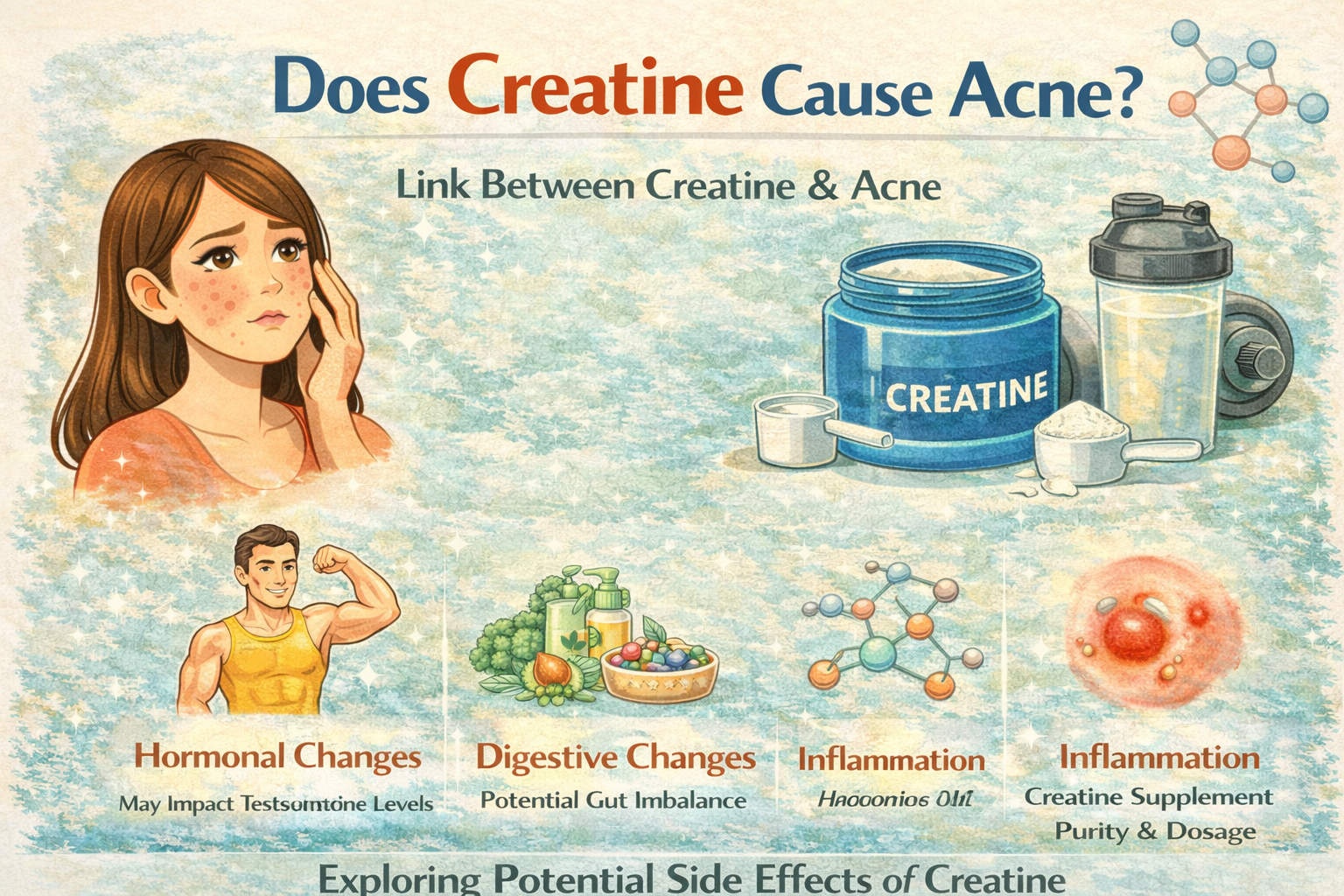
If you’ve ever searched “does creatine cause pimples” after noticing a new breakout during your supplement routine, you’re not alone. This question pops up constantly in fitness forums, gym locker rooms, and dermatologist offices.
Understanding the real relationship between creatine and acne can help you make informed decisions about your supplement routine and skin health. This guide is for athletes, fitness enthusiasts, and anyone considering creatine supplementation who is concerned about skin health.
The connection seems intuitive: you start taking creatine supplements, you train harder, and suddenly your skin looks worse. But is creatine really the culprit, or is something else going on?
Let’s dig into what the research actually shows, why so many people blame creatine for their acne, and what you can do to keep your skin clear while still reaping the performance benefits.
Quick answer: Does creatine cause pimples?
Here’s the short version: current human research does not show that creatine directly causes acne or pimples. As of 2024, no well-designed clinical trials have established creatine supplementation as a direct trigger for acne breakouts.
That said, some people genuinely do notice their skin getting worse after starting creatine. The likely explanation? Indirect factors like increased sweating during intense workouts, dietary changes (hello, bulking season), or concurrent supplements like whey protein, not the creatine itself.
The study most often cited to link creatine and acne is a small 2009 trial on South African rugby players. Researchers found that a creatine loading protocol increased dihydrotestosterone (DHT, a potent androgen hormone) levels by about 56%. Since DHT can theoretically stimulate oil glands, some people assume this means creatine causes pimples. But here’s the catch: that study didn’t actually measure pimples or acne lesions at all, it hasn’t been replicated, and the sample size was tiny.
Key takeaways:
- No direct causal link between creatine monohydrate and acne has been established in human trials
- The 2009 DHT study is often misinterpreted—it measured hormones, not skin breakouts
- Most acne flares in creatine users are likely due to sweat, diet, training intensity, or other supplements
- For healthy adults taking 3–5 g/day, the risk of creatine-specific pimples appears very low
- Acne is multifactorial—rarely caused by any single supplement

What is creatine, really?
Before we can understand whether creatine affects your skin, it helps to know what this compound actually does in your body.
Creatine is a naturally occurring amino acid derivative that your body produces from three amino acids: arginine, glycine, and methionine. Your liver and kidneys handle most of this production, and about 95% of the creatine in your body ends up stored in your muscle cells.
You also get creatine from dietary sources, primarily red meat, pork, and fish. However, cooking reduces some of the creatine content, which is one reason creatine supplements became popular among athletes looking to maximize their stores.
Here’s what creatine does:
- Helps regenerate adenosine triphosphate (ATP) during short, intense efforts like sprints, heavy lifts, and high intensity workouts
- Supports muscle growth and increases in muscle mass over weeks of consistent training
- Improves physical performance and athletic performance during resistance training
- May support brain function and cognitive processing, particularly in vegetarians who tend to have lower baseline brain creatine levels
Creatine monohydrate remains the most researched form, with hundreds of studies spanning decades. The International Society of Sports Nutrition and other sports nutrition organizations have consistently rated it as safe for healthy adults at recommended doses.
What actually causes pimples and acne?
Understanding acne development helps put the creatine question in perspective. Acne isn’t just about one thing going wrong, it’s a perfect storm of multiple factors.
The basic mechanism:
Pimples form when hair follicles (pores) become clogged with a combination of excess sebum (oil), dead skin cells, and acne causing bacteria called Cutibacterium acnes (formerly Propionibacterium acnes). This blockage can lead to whiteheads, blackheads, inflammatory papules, or deep cystic lesions depending on the severity.
Key internal drivers:
- Puberty and the surge of androgen hormones
- Hormonal fluctuations during menstrual cycles
- Conditions like polycystic ovary syndrome (PCOS)
- Androgens (testosterone and DHT) that ramp up sebum production and oil production
- Genetic predisposition to hormonal acne
External and lifestyle factors:
- Wearing makeup or heavy cosmetics that trap oil
- Occlusive skincare products that don’t let skin breathe
- Tight clothing, straps, and equipment causing friction
- Not showering after your body sweats during training
- High chronic stress and inadequate sleep
- Smoking
Dietary triggers:
- High-glycemic foods (white bread, sugary drinks, processed snacks)
- Dairy products, particularly skim milk in some studies
- Very high protein intake, especially from whey protein shakes
The point here is simple: acne is multifactorial. It’s rarely caused by any single supplement or food.
When someone starts creatine and gets pimples, there are usually a few factors at play beyond just the powder in their shaker.
Does creatine cause pimples? What the research says
Let’s look at what the science actually tells us—not forum speculation, not TikTok claims, but peer-reviewed research.
The bottom line from clinical trials:
As of 2024, there are no well-designed human studies demonstrating that oral creatine use directly increases acne incidence or severity. Most creatine research focuses on performance outcomes, muscle mass gains, and safety markers like kidney and liver function. Acne simply doesn’t show up as a consistent side effect in these trials.
Consider this: a NIH review examined 22 trials involving over 700 participants and found zero reported acne incidences at standard doses. The most common complaints? Minor gastrointestinal issues in 1–2% of users—that’s it.
About that 2009 study everyone cites:
The frequently mentioned study on South African rugby players tested a creatine loading protocol (25 grams daily for 7 days, then 5 grams for 14 days). Researchers found DHT levels increased by about 56%, from 0.98 nmol/L to 1.53 nmol/L.
Here’s what that study did NOT do:
- Track pimples, acne lesions, or any skin outcomes
- Include a large sample size (only 20 participants)
- Get replicated by subsequent research
- Establish that the DHT increase actually causes skin problems
What major organizations say:
Position stands from the International Society of Sports Nutrition (often cited as Int Soc Sports Nutr in research) classify creatine as safe with no established causal link to acne. These comprehensive reviews look at decades of research and consistently find creatine monohydrate to be one of the safest ergogenic supplements available.
The source of most claims:
Most “creatine caused my pimples” stories come from anecdotal reports on social media, Reddit, or bodybuilding forums. While these experiences are real and worth noting, they cannot prove causation. Correlation isn’t causation, especially when dozens of other variables are changing simultaneously.
How could creatine theoretically influence acne?
Even without direct evidence, it’s worth exploring the theoretical pathways researchers have proposed. Understanding these helps explain why the myth persists.
The hormonal hypothesis:
The main proposed link is hormonal. If creatine does increase DHT levels (as suggested in that single 2009 study), DHT could theoretically stimulate sebaceous glands to produce more oil. More oil potentially means more clogged pores and more pimples.
But here’s the problem with this theory:
- Even if DHT rises modestly, that doesn’t guarantee acne—individual sensitivity of oil glands and genetics matter enormously
- Population-level DHT typically remains below acnegenic thresholds even after supplementation
- The testosterone changes at standard doses are minimal (10–15% during heavy training at most)
The confounding factors:
Many users start creatine at the same time as:
- Higher-calorie bulking diets with more processed foods
- Increased whey protein consumption
- More intense exercise sessions that cause more sweating
- Changes in sleep, stress, or lifestyle
Any of these can independently affect skin health and trigger breakouts.
What creatine definitely doesn’t do:
- Physically clog pores like comedogenic oils or makeup
- Directly alter skin microbiome
- Act like anabolic steroids, which have an 80–90% incidence of causing severe acne
The mechanisms remain theoretical and unproven. That’s an important distinction.
Topical creatine vs. supplement creatine: different story for skin
Here’s something that might surprise you: when applied directly to skin, creatine may actually have benefits for skin health.
Research from the early 2000s, including a study in the Journal of Investigative Dermatology, found that topical creatine formulations (3–5% concentrations) could:
- Reduce UV-induced skin damage by 20–30%
- Boost collagen type I synthesis by 15–25%
- Improve skin barrier function through increased glycosaminoglycans and ceramides
- Help with skin aging by reducing fine lines and sagging
These studies looked at photoaging and sun damage, not acne. And importantly, they examined creatine applied externally to skin, not taken orally as a sports nutrition supplement.
The takeaway? Don’t confuse face creams containing creatine with the powder you mix into your post-workout shake. Different delivery methods, different doses, different outcomes.
Why some people blame creatine for their pimples
If creatine doesn’t directly cause acne, why do so many gym-goers swear it made them break out? The answer lies in timing, confounding variables, and human psychology.
The timing trap:
When you start taking creatine, you’re usually also making other changes:
- Training harder and longer
- Eating more calories to support muscle growth
- Adding other dietary supplements to your stack
- Sleeping less due to early morning gym sessions
If pimples appear during this period, creatine is the obvious suspect. But it might be the least likely culprit.
The sweat factor:
Creatine helps you train harder, which means your body sweats more. If you’re wearing tight workout clothes, using straps, helmets, or headphones, and not showering immediately after training, you’re creating a perfect environment for acne.
Research suggests that showering within 30 minutes of training can reduce breakout risk by up to 50%. That’s not about creatine, that’s about hygiene.
The bulking diet problem:
Bulking season often means:
- More dairy products and whey protein shakes (linked to acne in some studies)
- Higher glycemic foods for easy calories
- Increased overall calorie intake
Whey protein in particular has been associated with acne flares in 40–60% of gym-related acne cases according to some dermatological surveys. It triggers IGF-1 (insulin-like growth factor 1) pathways that can stimulate oil production.
The reverse causation:
When someone quits creatine and their skin clears up, they assume creatine was the problem. But quitting often coincides with:
- Reduced training intensity (less sweating)
- Cleaner eating habits
- More attention to skincare routine
- Lower stress levels
Practical suggestion:
Keep a 4–8 week skin and lifestyle factors diary. Track everything: supplements, diet, training, sleep, skincare, stress. This helps separate creatine timing from other variables before you blame one thing.
Other supplements and drugs that really can worsen acne
Not all supplements are created equal when it comes to skin. Some have much stronger evidence linking them to acne than creatine does.
Documented acne triggers:
|
Substance |
Acne Risk |
Notes |
|---|---|---|
|
Anabolic steroids (testosterone, trenbolone, Dianabol) |
Very high (80–90% incidence) |
Cause severe cystic acne on face, chest, back |
|
Prohormones |
High |
Similar mechanism to anabolic steroids |
|
High-dose whey protein |
Moderate |
Linked to IGF-1 elevation; sweetened varieties may be worse |
|
Certain medications (corticosteroids, lithium, some epilepsy drugs) |
Variable |
Check with prescriber if concerned |
Where creatine fits:
Major sports nutrition position statements do not list creatine monohydrate as an acne-causing agent. It sits in a completely different category than the substances above.
The distinction matters: if you’re experiencing severe acne, don’t automatically blame creatine while ignoring a massive whey protein intake or other lifestyle factors that have clearer evidence behind them.
How to prevent pimples while using creatine
Whether creatine affects your skin or not, good habits will help. Here’s a practical guide for keeping your skin clear while still benefiting from creatine for athletic performance.
Skincare Routine Tips
- Use a gentle, non-comedogenic cleanser twice daily
- Avoid harsh scrubbing that irritates skin and triggers rebound oil production
- For acne prone skin, consider products with salicylic acid (2%) or benzoyl peroxide (5%) on problem areas
- Keep your personalized skincare routine simple—you don’t need 10 products
Post-Workout Hygiene
- Shower as soon as possible after training—ideally within 30 minutes
- Change out of sweaty workout clothes immediately
- Remove wearing makeup before workouts to avoid sweat-makeup-bacteria buildup
- Wear clean workout clothes every session (yes, every session)
Smart Skincare Products
- Use an oil free sunscreen if training outdoors
- Pick non-comedogenic moisturizers that won’t block pores
- Avoid heavy, occlusive products during training
Diet and Supplement Monitoring
- Stick to 3–5 grams daily for most adults
- Skip extreme loading protocols (20+ grams daily) unless there’s a specific reason
- Stay well-hydrated (3–4 liters daily helps overall health and skin)
- Reduce high-glycemic snacks and sugary drinks
- If dairy seems to correlate with acne flare ups, trial a 4–6 week reduction while keeping creatine constant
- Consider whether your protein intake from whey might be a bigger factor than creatine
These skincare tips work regardless of whether you take creatine. But they’re especially important for anyone doing intense exercise regularly.
When to consider adjusting your creatine use
For most people, creatine won’t be the issue. But everyone’s body reacts differently, and there are times when adjusting makes sense.
Consider a trial pause if:
- You notice a clear, repeatable pattern: pimples consistently worsen within 1–2 weeks of restarting creatine and improve within a few weeks of stopping
- You’ve already optimized skincare, post-workout hygiene, and diet without improvement
- Other supplements and lifestyle factors have been ruled out
The right approach:
- First, optimize your skincare routine and post-gym hygiene
- Then, adjust diet (reduce dairy, high-glycemic foods)
- Only after these changes, consider pausing creatine to see if skin improves
When to seek professional guidance:
- If you’re an athlete who relies on creatine to enhance athletic performance, talk to a sports physician before making changes
- If you have a history of hormonal disorders, PCOS, or severe hormonal acne, consult a dermatologist
- If acne is severe, scarring, or emotionally distressing, get professional help regardless of supplement use
Managing acne shouldn’t mean sacrificing performance gains without evidence that creatine is actually the problem.
Frequently asked questions about creatine and pimples
Can creatine cause pimples in teenagers?
Teenagers are already at peak acne risk due to puberty hormones. There’s no strong evidence that creatine adds significantly to this risk. However, teens should only use nutritional supplements like creatine under adult or medical supervision. Focus on proper nutrition, hydration, and skincare first.
Does creatine raise testosterone enough to cause acne?
Most human studies show little to no meaningful rise in total testosterone at standard doses. Any increase tends to be small (10–15% during heavy resistance training) and not proven to drive acne development. The hormonal changes from creatine are far less dramatic than those from anabolic steroids.
Is creatine worse for oily or acne-prone skin?
People with acne prone skin may be more sensitive to any indirect changes, more sweating during intense workouts, dietary shifts, friction from equipment. This makes hygiene and a consistent skincare routine even more important. But creatine itself isn’t uniquely dangerous for oily skin types.
Will stopping creatine clear my skin?
Some people do see improvement after quitting, but this often coincides with other lifestyle factors changing too. Before crediting “quitting creatine,” track whether you also changed your diet, training intensity, skincare, or stress levels. The creatine might have been an innocent bystander.
Can I take creatine if I’m on acne medication like isotretinoin or antibiotics?
There’s no known direct drug interaction between creatine and common acne medications in people with healthy kidneys. However, always check with your dermatologist before combining supplements with prescription treatments. They can provide guidance specific to your situation.
Does creatine make your face bloated or puffy?
Creatine can increase water storage in muscle cells, which sometimes gives muscles a “fuller” appearance. Some people notice slight weight gain or body weight increases from this water retention. This is different from inflamed pimples or true facial swelling, it’s intramuscular water, not facial bloat. If you notice facial puffiness, it’s more likely related to diet, sleep, or other factors than creatine specifically.
Does creatine affect brain function as well as muscles?
Yes—emerging research suggests creatine may support brain creatine levels and cognitive function, particularly in vegetarians who tend to have lower baseline stores. This has nothing to do with skin but shows that creatine has effects beyond just helping increase muscle mass.
Bottom line: Creatine and pimples
Current evidence does not support creatine as a direct cause of pimples or acne. Despite widespread forum speculation and viral social media claims, no quality human trials have shown that taking creatine at standard doses triggers acne outbreaks. The 2009 study on DHT is interesting but limited, and it didn’t even measure skin outcomes.
Acne is typically driven by hormonal changes, genetics, diet, skincare habits, sweat, clothing friction, and other supplements (particularly whey protein and anabolic steroids) far more than by creatine itself. If you’re experiencing breakouts after starting creatine, the more likely culprits are the lifestyle changes that came along with it: harder training, more sweating, different eating patterns, and possibly less attention to post-workout hygiene.
If you benefit from creatine for muscle growth, support muscle growth, or to improve athletic performance, don’t rush to drop it at the first sign of a pimple. Focus first on smart skincare, post-gym hygiene (wear clean workout clothes, shower promptly, keep skin clean), and dietary adjustments. More research would certainly be welcome, but what we have now doesn’t justify avoiding an otherwise safe and effective supplement.
That said, everyone’s body reacts differently. If your acne is severe, scarring, or causing significant distress, see a dermatologist. Track your habits carefully, change one variable at a time, and make informed decisions based on your own patterns—not internet myths. Creatine and acne aren’t the clear-cut connection some claim, but your skin is worth paying attention to regardless.
- Learn more about vitamin B5 and acne
- Learn more about how to reduce acne inflammation
- Learn more about supplements good for skin
Medical Disclaimer
This article is for informational purposes only and does not substitute professional medical advice. Always consult a qualified healthcare provider before starting supplements or changing medical treatment. These statements have not been evaluated by the Food and Drug Administration. This product is not intended to diagnose, treat, cure, or prevent any disease.


