
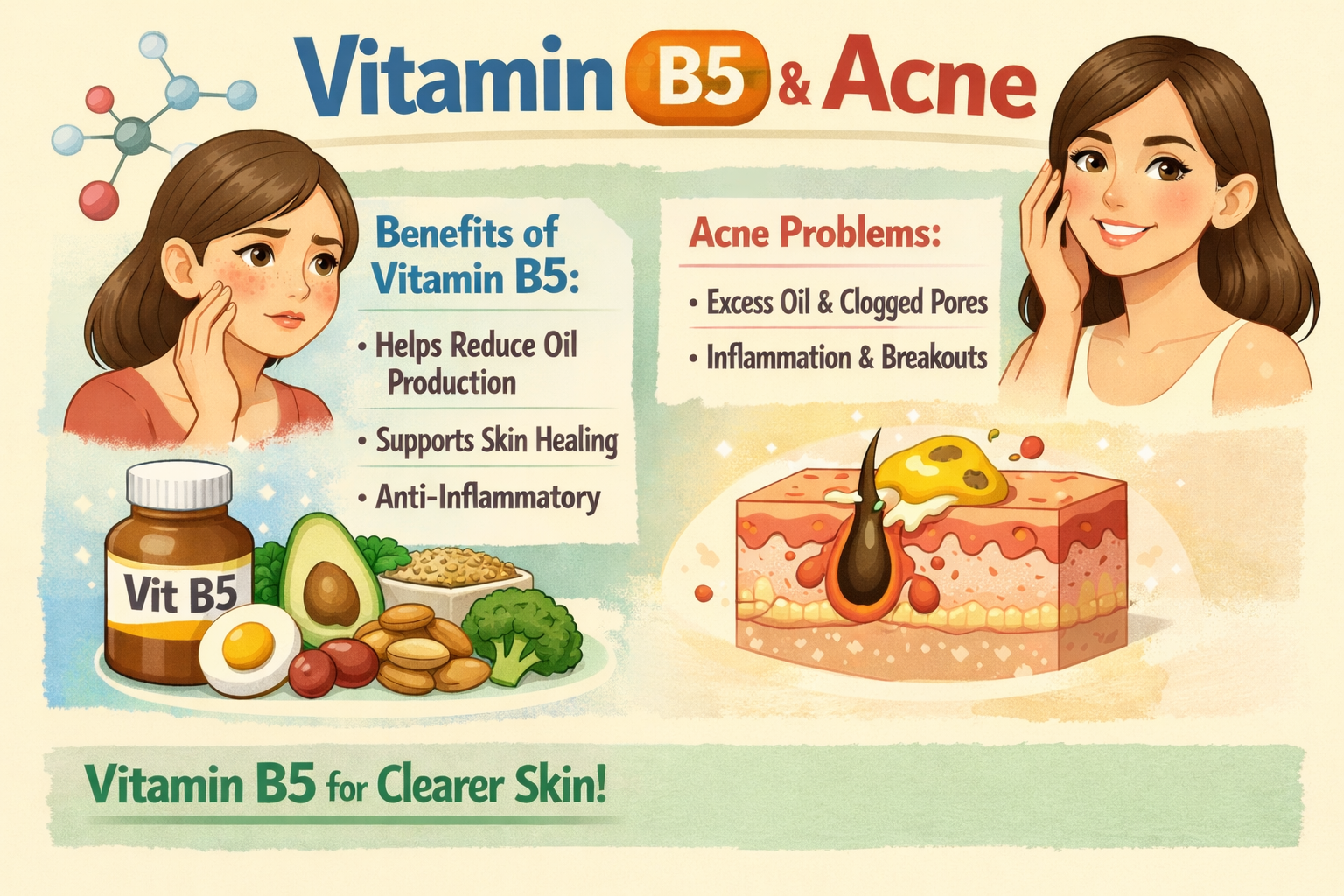
If you’ve been searching for a gentler approach to treating acne - something beyond the usual benzoyl peroxide burn or the heavy commitment of isotretinoin, you’ve probably stumbled across vitamin B5. Also known as pantothenic acid, this water soluble vitamin has gained attention in skincare circles for its potential to calm breakouts by targeting excess oil at its source.
But here’s the thing: the internet is full of bold claims about acne supplements, and separating genuine promise from marketing hype takes work. This guide breaks down what vitamin B5 actually does, what the research suggests, how to use it safely, and whether it deserves a spot in your treatment plan.
Key Takeaways:
- Promising evidence: Evidence suggests vitamin B5 (pantothenic acid) may help reduce acne, particularly for mild to moderate cases, but studies remain limited and it’s not a guaranteed cure.
- How it may work: B5 appears to reduce sebum production and inflammation by supporting coenzyme A activity, potentially leading to fewer breakouts within 4–12 weeks for some users.
- Dosing varies widely: Low-dose products contain 150–250 mg/day, while clinical trials have used up to 2–4 g/day.
- Complement, don’t replace: Vitamin B5 works best as an add-on to proven acne treatments and a solid skincare routine, not as a substitute for prescription medications when they’re needed.
- Safety first: Avoid mega-dosing (>8gr/day) without professional guidance, watch for interactions with other supplements, and consult a dermatologist or GP before starting B5 supplementation.
What Is Vitamin B5 (Pantothenic Acid)?
Vitamin B5, or pantothenic acid, is an essential nutrient your body cannot produce on its own. As a water soluble B vitamin, it plays a central role in energy metabolism and supports numerous cellular processes, including those that directly affect skin health.
The Coenzyme A Connection
The reason B5 matters for your skin comes down to one molecule: coenzyme A (CoA). Your body uses pantothenic acid to synthesize CoA, which then helps convert fats, carbohydrates, and proteins into usable energy. When CoA production runs smoothly, fatty acids are metabolized efficiently throughout your body, including in the sebaceous gland cells responsible for oil production.
This connection between lipid metabolism and skin oiliness forms the foundation of B5’s proposed acne benefits.
Dietary Sources of Vitamin B5
You’re likely already getting B5 through your diet. Here are some natural sources with approximate content:
|
Food |
Serving Size |
B5 Content (approx.) |
|---|---|---|
|
Chicken breast (roasted) |
85 g |
1.3 mg |
|
Beef liver |
85 g |
5.6 mg |
|
Whole egg |
1 large |
0.7 mg |
|
Avocado |
½ medium |
1.0 mg |
|
Sunflower seeds |
30 g |
2.0 mg |
|
Shiitake mushrooms |
1 cup cooked |
2.6 mg |
|
Sweet potatoes |
1 medium |
1.0 mg |
|
Fortified foods (cereals) |
1 cup |
1.5–5 mg |
The recommended adequate intake for adults sits around 5 mg per day in the US and EU. Most people eating a varied diet meet this easily, which is why true pantothenic acid deficiency is exceptionally rare.
That said, some individuals with restrictive diets, malabsorption issues, or increased metabolic demands might benefit from targeted supplementation, even without clinical deficiency as vitamin B5 is water-soluable and the body will excrete what it does not use.
How Might Vitamin B5 Help Acne?
The potential acne benefits of vitamin B5 stem from three main pathways: reduced sebum production, lower inflammation, and improved skin barrier function.
The Coenzyme A–Sebum Pathway
Here’s the core theory: when your body produces adequate CoA, fats are metabolized efficiently in the liver and other tissues. But when CoA activity is suboptimal, excess lipids may get diverted to the skin, where they’re excreted as sebum. Too much sebum production clogs pores, creates a breeding ground for bacteria, and sets the stage for acne breakouts.
By boosting CoA levels through high-dose B5 supplementation, proponents argue you can address excessive sebum production at its metabolic root.
The Original Hypothesis
This idea traces back to Dr. Lit-Hung Leung in the 1990s. He proposed that many acne patients had a relative, not absolute, pantothenic acid status issue, meaning their B5 levels weren’t deficient by standard measures but were insufficient for optimal lipid processing. His early case studies reported improvements in patients taking high doses of d-calcium pantothenate.
It’s worth noting: this hypothesis remains a theory, not universally accepted science. But it laid groundwork for later research.
Modern Perspectives
More recent researchers, including Dr. Yoram Harth, have explored additional mechanisms:
- Keratinocyte regulation: B5 may influence how skin cells proliferate and shed, potentially reducing the dead skin cells that combine with oil to form clogged pores
- Anti inflammatory effects: Pantothenic acid appears to modulate immune responses around acne lesions, helping reduce inflammation and redness
- Epidermal barrier function: B5 supports ceramide synthesis, strengthening the skin barrier and making skin more resilient to irritants and bacteria
These multi-target effects explain why some practitioners view B5 as addressing root causes rather than just symptoms.

What Does the Research Say About B5 and Acne?
Let’s be direct: the evidence base for vitamin B5 and acne is promising but limited. There are only a handful of well-designed human trials, and most have focused on mild to moderate facial acne blemishes.
The 2014 Landmark Study
The most frequently cited research is a randomized, double blind, placebo controlled study published in 2014. Participants with moderate acne took a pantothenic acid-based supplement providing 2.2 g twice daily (4.4 g total) for 12 weeks.
Results:
- Statistically significant reductions in both inflammatory and non-inflammatory lesion counts compared to the placebo group
- Improvements in overall skin appearance and oiliness
- No serious adverse effects reported
Researchers attributed the benefits partly to B5’s antibacterial properties and its ability to support skin softening through 4’-phosphopantetheine conversion.
Other Supporting Evidence
Additional smaller trials and case series up to 2023 have reported:
- Over 60% reduction in acne lesions after 12 weeks of daily oral administration
- Visible improvements emerging within 8–12 weeks for most responders
- Reduction in oiliness and pore congestion
However, these studies typically had modest sample sizes, and some were industry-funded, factors that warrant caution when interpreting results.
What’s Missing
No large, independent head-to-head trials have compared B5 directly to standard treatments like benzoyl peroxide, topical retinoids, or oral antibiotics. Without this comparative data, it’s difficult to position B5 precisely within the acne treatment hierarchy.
Bottom line: Current evidence supports B5 as a potentially helpful add-on, especially for oily skin prone to moderate acne. But more research is needed before anyone can call it a first-line therapy.
How Much Vitamin B5 for Acne? Dosage, Forms & Safety
There is no official, medically established “acne dose” of B5. What follows is based on limited research and expert opinion. An FDA factsheet for pantothenic acid.
Typical Supplemental Ranges
|
Category |
Daily Dose Range |
Notes |
|---|---|---|
|
General health products |
5–50 mg |
Meets basic needs; unlikely to affect acne |
|
Moderate “skin support” |
100–250 mg |
Common starting point for acne supplementation |
|
Clinical trial doses |
2–4.4 g |
High doses that showed promise in studies |
|
Maximum reported |
~8.8 g |
Used under medical supervision in some research |
Most acne supplements marketed today contain between 150–250 mg per serving, often in vegetable capsules combined with other nutrients like zinc or vitamin A.
Forms of B5
The two main supplemental forms are:
- D-calcium pantothenate: The best form used in most acne studies; highly stable and well-absorbed
- Pantethine: A derivative with different metabolic properties; less commonly used for acne
When shopping for acne supplements, look for d-calcium pantothenate specifically.
A Cautious Approach
Here’s a sensible strategy:
- Start with food: Emphasize B5-rich natural products in your diet
- Add a low-to-moderate dose: Begin with 100–250 mg daily
- Monitor for 4–8 weeks: Track changes in oiliness and breakout frequency
- Consider higher doses only with guidance: Starting high dose supplements without professional input isn’t advisable
Side Effects and Safety
At high doses, the most common issue is gastrointestinal upset, loose stools or diarrhea during the first few weeks. This typically resolves by reducing the dose or taking B5 with meals.
Other potential adverse effects at mega-doses include:
- Mild headaches
- Nausea
- Digestive discomfort
Because B5 is water soluble, excess amounts are generally excreted rather than stored. However, taking multi-gram doses over many months hasn’t been studied for long-term safety. If you’re considering high doses for chronic breakouts, periodic check-ins with a healthcare provider make sense.
Vitamin B5 vs. Standard Acne Treatments (Including Accutane)
Understanding where B5 fits requires comparing it to established acne treatments.
The Medication Landscape
Standard medical treatments for acne include:
- Topical retinoids - Normalize skin cell turnover, reduce clogged pores
- Benzoyl peroxide - Kills acne-causing bacteria, reduces inflammation
- Oral antibiotics - Target bacterial overgrowth systemically
- Hormonal treatments - Address androgen-driven sebum production
- Isotretinoin (Accutane) - Reserved for severe acne; dramatically shrinks sebaceous glands
How Isotretinoin Works
Isotretinoin is a vitamin A derivative that powerfully reduces oil production by shrinking sebaceous glands, normalizing follicular keratinization, and decreasing C. acnes populations. For severe acne, nodular acne, or cystic acne that scars, it can be transformative.
But the tradeoffs are significant:
- Teratogenicity (causes severe birth defects)
- Dry skin, lips, and eyes
- Potential mood changes
- Liver strain requiring monitoring
- Required pregnancy prevention programs
Where B5 Fits
Vitamin B5 offers a gentler alternative:
|
Factor |
Vitamin B5 |
Isotretinoin |
|---|---|---|
|
Effect on oil production |
Mild to moderate reduction |
Dramatic reduction |
|
Side effect profile |
Minimal (GI upset at high doses) |
Significant and varied |
|
Availability |
Over-the-counter |
Prescription only |
|
Best for |
Mild to moderate acne |
Severe, scarring, or resistant acne |
|
Evidence quality |
Limited but promising |
Extensive and well-established |
Some clinicians allow combining low-to-moderate dose B5 with prescription treatments. However, any combination, especially with isotretinoin, should be reviewed by a dermatologist to avoid unnecessary supplement stacking.
When to Seek Professional Help
If your acne is:
- Nodular or leaving marks
- Not improving after 3–6 months of over-the-counter care
- Causing significant distress
Then it’s time for professional evaluation rather than continuing to increase supplement doses. B5 may help reduce acne in milder cases, but it’s not a substitute for medical treatment when you’re dealing with health conditions that require stronger intervention.

Natural Sources of Vitamin B5 & Lifestyle Tips for Clearer Skin
Supplements work best when they’re part of a broader strategy, not operating in isolation. Building a foundation with B5-rich foods and skin-supportive habits amplifies any supplement you add.
B5-Rich Foods to Prioritize
|
Food |
Serving |
Why It Helps |
|---|---|---|
|
Beef liver |
85 g |
Highest B5 content; also rich in vitamin A |
|
Grilled chicken |
150 g |
Lean protein with substantial B5 |
|
Whole eggs |
1–2 |
Easy to incorporate; contains healthy fats |
|
Cooked lentils |
½ cup |
Plant-based B5 plus fiber |
|
Fortified cereals |
1 cup |
Convenient fortified foods option |
|
Peanuts |
30 g |
Snackable B5 source |
|
Shiitake mushrooms |
1 cup |
Pairs well with meals; excellent B5 |
Synergistic Nutrients
Build meals that combine B5 with other skin-supportive nutrients:
- Vitamin A from carrots or sweet potatoes - supports skin cell turnover
- Zinc from pumpkin seeds or oysters - anti inflammatory and wound healing
- Omega-3 fatty acids from salmon or flaxseed - reduce inflammation
- Vitamin C from citrus or bell peppers - supports collagen production
Lifestyle Considerations
Beyond food:
- Prioritize low-glycemic foods: Research suggests high sugar intake and processed foods may worsen breakouts
- Moderate dairy if you notice triggers: Some people find skim milk or whey protein aggravates their skin
- Manage stress: B5 supports adrenal function, but chronic stress still elevates cortisol and can amplify acne breakouts
- Sleep consistently: Recovery happens during rest; aim for 7–9 hours
- Avoid over-washing: Stripping your skin barrier can backfire, triggering more oil production
These lifestyle factors, combined with adequate B5 intake, create conditions for clearer skin over several months.
How to Use Vitamin B5 in an Acne Routine
This section provides a practical framework for integrating vitamin B5 into your overall skin care routine.
Morning Routine
- Gentle cleanser: Avoid harsh sulfates that strip the skin barrier
- Non-comedogenic moisturizer: Hydration reduces compensatory oil production
- Broad-spectrum SPF 30+: Protects healing skin from hyperpigmentation
- Optional topical actives: Niacinamide (vitamin B3) or salicylic acid to unclog pores and reduce inflammation
These products can be used alongside oral B5 without conflict.
Evening Routine
- Makeup removal (if needed): Oil-based cleansers work well for thorough removal
- Mild cleanser: Same as morning, keep it gentle
- Targeted treatment: Topical retinoid, benzoyl peroxide, or azelaic acid depending on your acne treatment plan
- Lightweight moisturizer: Supports overnight barrier repair
Avoid harsh scrubs, alcohol-heavy toners, or over-exfoliation as these disrupt epidermal barrier function and can worsen acne.
Where B5 Fits
Oral administration: Take your chosen daily oral dose of B5 (typically 100–250 mg to start) with meals, either once or split twice daily. Food helps absorption and reduces GI upset. Of course you could always use ClearB5 complexion support supplement to help without the need for taking multiple pills per day.
Topical option: Some skincare products contain panthenol, a B5 derivative that can be applied topically for barrier support and soothing. Note that most acne research focuses on oral, not topical B5, so topical panthenol is a complement, not a substitute.
Tracking Progress
Give B5 a fair trial: 8–12 weeks minimum before judging effectiveness.
Track these markers:
- Changes in overall oiliness
- Number of new inflamed pimples per week
- Healing speed of existing lesions
- Reduction in redness or irritation
Simple weekly photos and brief notes help you objectively assess whether you’re seeing fewer breakouts or brighter skin over time.
Vitamin B5 for Hair, Stress & Overall Skin Health
Vitamin B5 is often marketed beyond acne, for healthy hair, stress resilience, and general skin health. Here’s what actually holds up.
Hair Health
B5 supports healthy hair through its role in keratin synthesis and follicle metabolism. Panthenol (topical B5) is a common ingredient in hair products, adding moisture and reducing breakage.
However, if you’re experiencing hair loss, simply adding B5 won’t necessarily reverse it. True pantothenic acid deficiency can contribute to hair changes, but deficiency is rare. Other causes such as hormonal, genetic, or nutritional, are usually more relevant.
Hair growth involves multiple factors; B5 is one piece, not the whole puzzle.
Stress Response
B5 is involved in adrenal gland function and the synthesis of stress hormones. Some people report feeling more resilient when supplementing.
That said, robust clinical data on B5 as an “anti-stress” supplement are limited. Managing stress through sleep, exercise, and lifestyle modifications likely has more impact than any single vitamin.
Broader Skin Benefits
Non-acne skin benefits are better established for topical panthenol:
- Improved hydration
- Enhanced skin barrier repair
- Reduced irritation and redness
- Support for wound healing
These effects contribute to overall skin health and may help calm skin issues beyond acne vulgaris.
The Big Picture
Supporting whole-body health with adequate B vitamins, quality sleep, balanced nutrition, and stress management indirectly creates conditions for more stable skin. Chronic breakouts often improve when the body’s overall metabolic and immune systems function optimally.

In Summary: Is Vitamin B5 Worth Trying for Acne?
Vitamin B5 is an essential nutrient that may help lower sebum and reduce inflammation. Small studies suggest benefits for mild to moderate acne, particularly in people with oily skin types.
It’s not a miracle cure. Results vary considerably between individuals, and high-dose use lacks long-term safety data. Some people see significant improvement in 8–12 weeks; others notice minimal change.
A sensible strategy:
- Optimize your diet with B5-rich foods
- Consider low-to-moderate B5 supplementation (100–250 mg)
- Combine with proven topical treatments (retinoids, benzoyl peroxide, etc.)
- Escalate to stronger medications only if needed—and only with professional guidance
Before adding B5 or any acne supplements to your regimen, discuss your overall approach with a dermatologist or healthcare provider. This is especially important if you have other health conditions, are pregnant or breastfeeding, or already take multiple supplements.
FAQ: Vitamin B5 and Acne
Can vitamin B5 cause acne to get worse before it gets better?
Some people report an initial purging-like phase when changing any acne regimen, but there’s no strong evidence that B5 specifically causes flares. If breakouts clearly intensify and persist beyond 2–3 weeks, consider reducing the dose or discontinuing. True “purging” is more associated with retinoids that accelerate cell turnover, not B vitamins.
Is it safe to take vitamin B5 every day for years for acne maintenance?
Daily intakes near the recommended 5–50 mg are considered safe long-term. However, taking multi-gram doses for years hasn’t been well studied, and studies suggest caution with extended mega-dosing (>8 grams/day). Use the lowest effective dose that maintains results, and have periodic check-ins with your doctor if using high doses over extended periods.
Can I combine vitamin B5 with other supplements like zinc, omega-3, or probiotics for acne?
Generally, combining moderate doses of B5 with zinc, omega-3 fatty acids, and probiotics is common and usually safe. Many acne-focused supplement stacks include these ingredients together. However, stacking many products increases side-effect risk and costs. Review all supplements with a professional to avoid overlapping nutrients, particularly biotin, which may interfere with B5 absorption.
Does vitamin B5 help with hormonal acne around the jawline or during my period?
B5 may help reduce overall oiliness and inflammation, which can indirectly improve cyclical breakouts. However, it doesn’t directly balance sex hormones like estrogen or testosterone. For true hormonal acne, options like combined oral contraceptives or spironolactone are more targeted, and require a prescription. Research suggests B5 works better for oil-driven acne than hormone-driven patterns.
Is getting vitamin B5 from food enough, or do I need a supplement for acne?
Most people easily meet basic B5 needs through diet, around 5 mg daily. This is adequate for general health but falls well below the doses used in acne studies (often 2–4 g). If you’re specifically seeking a therapeutic effect on acne, a supplement on top of a B5-rich diet may be worth considering. Start with food as your foundation, then discuss supplementation with your healthcare provider based on your specific skin issues and goals.
Click the link if you’re looking for vitamin b5 complexion vitamins to help with your overall appearance and learn what ClearB5 can do for you.
- Learn more about Zinc for Acne
- Learn more about Vitamin B3 for Acne
Medical Disclaimer
This article is for informational purposes only and does not substitute professional medical advice. Always consult a qualified healthcare provider before starting supplements or changing medical treatment. These statements have not been evaluated by the Food and Drug Administration. This product is not intended to diagnose, treat, cure, or prevent any disease.


