
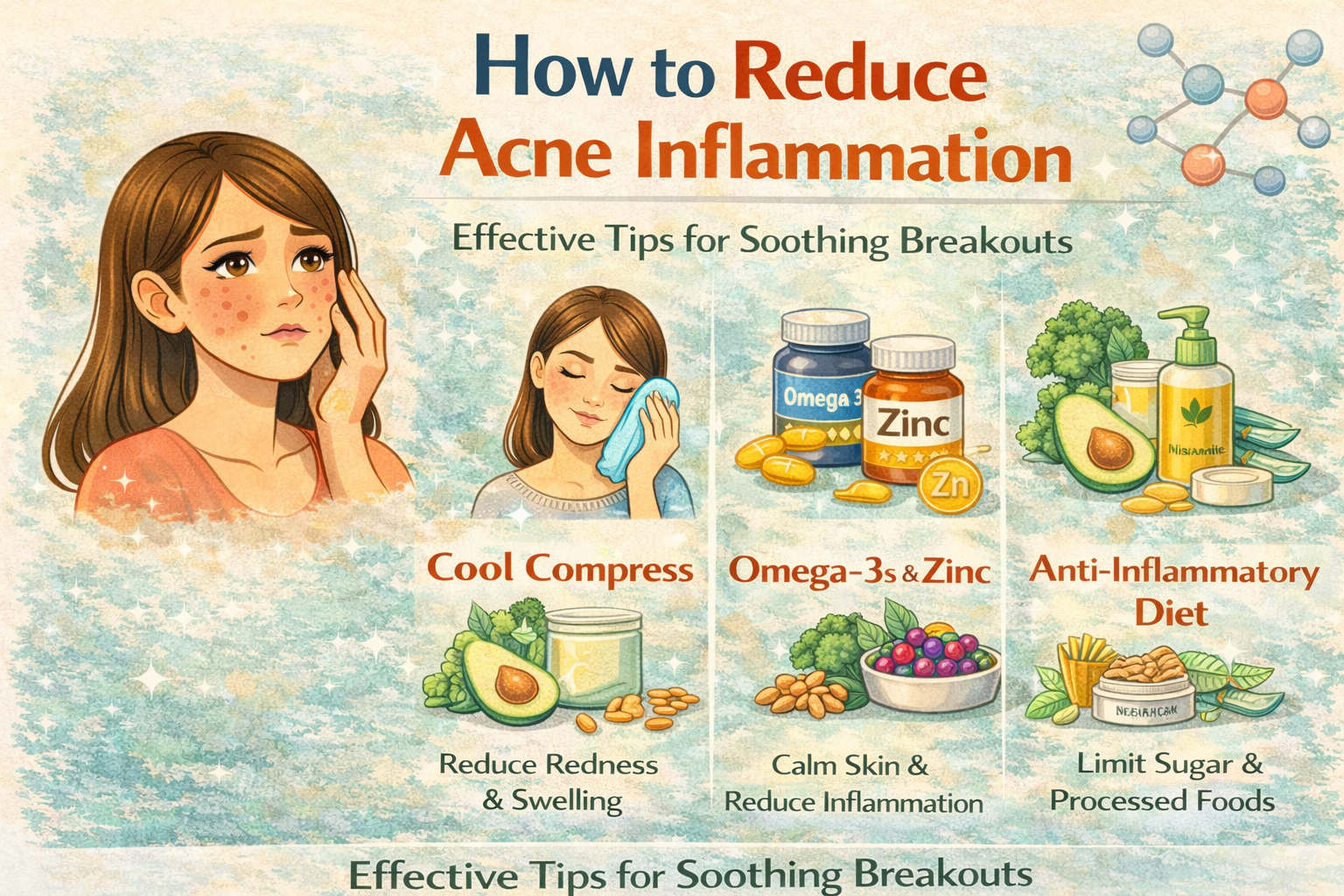
Inflammation is what makes acne visible, painful, and long-lasting. While clogged pores initiate acne, acne inflammation is what turns small blockages into red, swollen pimples, pus-filled lesions, and cystic breakouts. For people with oily or combination skin in their 20s, 30s, and 40s, learning how to reduce acne inflammation is often more important than aggressively drying the skin.
This comprehensive guide explains what causes inflammatory acne, how long inflammation typically lasts, and the most effective ways to calm acne redness and swelling safely. It covers fast at-home strategies, non-prescription topical treatments, supplements and vitamins that support skin inflammation, prescription options such as doxycycline, and long-term routines that help prevent inflammation from returning.
Quick Action Plan: How to Reduce Acne Inflammation Fast
For noticeable improvement in the first 24–72 hours, focus on calming the skin, not attacking it.
Immediate steps
- Stop exfoliants, scrubs, and harsh actives
- Wash your face twice a day using a gentle cleanser to avoid irritation and effectively remove dirt, oil, and makeup
- Apply a topical anti-inflammatory (niacinamide or azelaic acid)
- Use ice for short intervals to reduce swelling
- Avoid picking, squeezing, or friction
- Support internally with hydration and anti-inflammatory nutrients
Washing your face twice a day with a gentle cleanser is essential for reducing acne inflammation and preventing irritation.
Now that you have a quick action plan, let’s dive deeper into what acne inflammation actually is.
What Is Acne Inflammation?
Acne inflammation occurs when the immune system reacts to clogged pores, bacteria (Cutibacterium acnes), and excess oil. Inflammatory acne includes:
- Red papules
- Pustules (pus-filled acne)
- Nodules
- Cystic acne
In contrast, non-inflammatory acne refers to blackheads and whiteheads, which are surface-level clogged pores that lack significant redness or swelling.
Inflammation increases blood flow and immune activity in the skin, leading to redness, swelling, warmth, and tenderness.
Symptoms of Inflammatory Acne
Inflammatory acne is more than just a few clogged pores, it’s marked by visible redness, swelling, and discomfort that can make skin feel sore to the touch. Common symptoms include red papules, pus-filled pustules, tender nodules, and deep cystic acne lesions. These spots often appear raised and can be painful, especially when pressure is applied. Unlike non-inflammatory blackheads or whiteheads, inflamed acne lesions are surrounded by redness and may feel warm or throbbing. Severe cases can lead to larger, swollen bumps that linger for weeks and may eventually cause acne scars if not treated properly. If you notice persistent swelling, pain, or clusters of sore pustules, you’re likely dealing with inflammatory acne that requires targeted treatment to reduce redness and prevent further skin damage.
Now that you understand what acne inflammation is, let's explore the differences between types of acne and why redness occurs.
Redness vs Acne Itself
- Comedonal acne: This type of acne involves clogged pores that form on the skin's surface with little to no inflammation. Comedonal acne appears as blackheads (open comedones) and whiteheads (closed comedones) and is generally not red or swollen.
- Inflammatory acne: This form of acne involves immune activation and tissue irritation, resulting in red, swollen, and often painful lesions such as papules, pustules, nodules, and cysts.
Reducing inflammation improves both appearance and healing speed.
With a clear understanding of the types of acne and the role of inflammation, let’s move on to why acne becomes inflamed in the first place.
Why Acne Becomes Inflamed
Acne inflammation is driven by several underlying causes. Understanding these can help you target the root of the problem and choose the most effective treatments.
Excess Sebum and Clogged Follicles
Oil traps bacteria and debris, triggering immune responses. Certain hair products, such as pomades and gels, can contribute to clogged follicles and worsen breakouts, especially along the hairline and forehead.
Hyperkeratinization: How Dead Skin Cells Contribute to Inflammation
One of the earliest steps in the development of inflammatory acne is hyperkeratinization—a process where the skin produces excess dead skin cells that don’t shed properly. Instead of sloughing off, these dead cells mix with sebum (oil) inside hair follicles, leading to clogged pores. When pores become blocked, it creates the perfect environment for bacteria to thrive and for inflammation to develop. This buildup not only triggers breakouts but also makes acne worse by fueling redness and swelling. People with acne prone skin often experience more hyperkeratinization, which is why gentle exfoliation and a consistent skincare routine are important for keeping pores clear. Avoiding harsh scrubs and using mild, non-comedogenic products can help prevent excess dead skin cells from contributing to inflamed acne.
Cutibacterium acnes and the Skin Microbiome
The skin’s surface is home to a diverse community of bacteria, known as the skin microbiome. One key player in acne is Cutibacterium acnes (formerly Propionibacterium acnes), a bacteria that normally lives harmlessly in hair follicles. However, when pores become clogged with oil and dead skin cells, C. acnes can multiply rapidly. This triggers the immune system, leading to the redness, swelling, and pus that characterize inflammatory acne. While some acne treatments aim to kill bacteria, it’s important not to disrupt the skin’s natural balance with overly harsh or frequent use of antibacterial products. Maintaining a healthy microbiome with gentle cleansers and targeted treatments like benzoyl peroxide or tea tree oil can help control C. acnes without making breakouts worse or causing more acne due to irritation.
Innate and Adaptive Immunity: The Body’s Response to Acne
When acne develops, the body’s immune system jumps into action to defend against bacteria and clogged pores. The first line of defense is the innate immune response, which quickly sends inflammatory cells to the site of a blocked follicle. This causes the redness, swelling, and pain seen in inflamed acne. If the problem persists, the adaptive immune system gets involved, producing antibodies and a more targeted response. In some people, this immune activity is stronger or lasts longer, leading to more severe or persistent inflammation. Understanding your skin’s immune response can help guide treatment choices, using anti-inflammatory ingredients, supporting the skin barrier, and avoiding triggers that worsen inflammation are all key to reducing inflammatory acne and achieving clearer skin.
Bacterial Signaling
C. acnes activates inflammatory pathways such as cytokines and toll-like receptors [1]. Cytokines are small proteins released by cells that signal and regulate immune responses, often leading to inflammation. Toll-like receptors are proteins on immune cells that recognize bacteria and trigger the body’s defense mechanisms, including inflammation. Antimicrobial agents are often used to target C. acnes, helping to reduce inflammation by managing the skin microbiota and limiting bacterial overgrowth.
Skin Barrier Damage
Over-cleansing and harsh treatments weaken the barrier, increasing inflammation.
Hormones and Insulin Signaling
Androgens and insulin-like growth factor-1 (IGF-1) increase oil production and inflammatory signaling [2]. Androgens are male hormones (like testosterone) present in both men and women that stimulate oil glands in the skin. Insulin-like growth factor-1 (IGF-1) is a hormone similar to insulin that can increase oil production and inflammation, often influenced by diet and stress. Some hormonal treatments for acne, such as spironolactone, can cause side effects like breast tenderness.
Stress and Cortisol
Stress elevates cortisol, which worsens inflammatory acne and delays healing.
Now that you know the main causes of acne inflammation, let’s look at how long it typically takes for inflammation to subside and what you can do to speed up the process.
How Long Does It Take for Acne Inflammation to Go Down?
- Mild inflammation: 3–7 days (typically seen in cases of mild to moderate acne)
- Moderate inflammatory pimples: 1–2 weeks
- Cystic acne: 2–6 weeks or longer
Early intervention shortens this timeline. Repeated irritation prolongs inflammation.
Understanding the timeline for healing helps set realistic expectations. Next, let’s explore the most effective topical ways to reduce acne redness and swelling.
Topical Ways to Reduce Acne Redness and Swelling
Niacinamide (Vitamin B3)
Benefits:
- Reduces redness and swelling
- Improves skin barrier function
- Helps regulate oil production
Best uses:
- Red, inflamed acne
- Sensitive or irritated skin
Clinical trials show niacinamide reduces inflammatory acne lesions comparably to topical antibiotics without antibiotic resistance risk [3].
Typical use: 2–5% concentration, once or twice daily.
Azelaic Acid
Benefits:
- Reduces redness and swelling
- Helps post-inflammatory marks
- Suitable for sensitive skin
Best uses:
- Inflammatory and hormonal acne
- Skin prone to discoloration
Often recommended for inflammatory and hormonal acne [4].
Salicylic Acid
Benefits:
- Reduces clogged pores
- Indirectly reduces inflammation
Best uses:
- Inflamed pimples with congestion
- Oily skin types
Overuse can increase irritation, so frequency matters [5].
Benzoyl Peroxide (Low Strength)
Benefits:
- Reduces acne bacteria
Best uses:
- Red, pus-filled pimples
- Moderate to severe breakouts
Important note: It is antibacterial, not anti-inflammatory. Overuse can worsen redness if barrier damage occurs [6].
Emergency At-Home Relief for Swollen Pimples
Ice for Pimples
Ice constricts blood vessels, temporarily reducing redness and swelling.
How to use:
- Wrap ice in a clean cloth
- Apply for 1–2 minutes on, 2 minutes off
- Repeat up to 3 times
What Not to Do
- Do not apply ice directly to skin
- Do not pop inflamed pimples
With topical strategies in place, let’s look at how supplements and vitamins can support your skin from the inside out.
Supplements and Vitamins That Help Reduce Acne Inflammation
Supplements support inflammation control from the inside out. Maintaining a healthy diet is also important for supporting skin health and reducing acne inflammation. They do not replace topical care but can complement it.
Zinc
- Reduces inflammatory cytokines and supports immune balance
- Oral zinc reduces inflammatory acne lesions in clinical trials [7][8]
- Typical range: 15–30 mg elemental zinc daily
Vitamin B5 (Pantothenic Acid)
- Supports fatty acid metabolism via coenzyme A, which helps regulate sebum production
- A randomized, double-blind, placebo-controlled study showed oral vitamin B5 significantly reduced acne lesions over 12 weeks [9]
- Well tolerated and often included in internal acne-support strategies
Omega-3 Fatty Acids
- Reduce systemic inflammation
- Clinical studies show omega-3 supplementation can reduce inflammatory acne severity [10]
Vitamin D
- Modulates immune responses
- Lower vitamin D levels are associated with more severe acne [11]
Vitamin C
- Supports antioxidant defense and healing
- Limited direct acne trials, but supports inflammation control and collagen repair [12]
Niacinamide (Oral)
- Supports systemic inflammation balance
- Used as part of comprehensive vitamin support rather than standalone therapy
Comprehensive Supplement Support
- Because acne inflammation is multifactorial, some individuals prefer comprehensive formulas that combine zinc, vitamin B5, niacinamide, and supportive nutrients.
- ClearB5 is an example of a supplement designed to support acne inflammation internally while complementing topical routines and lifestyle changes.
Supplements can be a helpful addition, but for moderate to severe cases, prescription options may be necessary. Let’s review the role of antibiotics in reducing acne inflammation.
Antibiotics for Acne Inflammation: Doxycycline and Oral Options
Is Doxycycline Good for Acne?
Yes, doxycycline is effective for moderate to severe inflammatory acne.
How it works:
- Reduces inflammatory signaling
- Suppresses C. acnes
Typical use:
- Short-term courses (3–4 months)
- Often combined with topical therapy
Risks and limitations:
- Antibiotic resistance
- Gastrointestinal upset
- Photosensitivity
Guidelines emphasize limiting duration and avoiding long-term use [13].
For the most severe cases, such as cystic acne, a more comprehensive approach is needed. Let’s look at the best strategies for calming severe inflammation.
Cystic Acne Treatments: Calming Severe Inflammation
Cystic acne is the most severe form of inflammatory acne, often resulting in large, painful nodules deep beneath the skin’s surface. Treating cystic acne requires a comprehensive approach to reduce inflammation, prevent scarring, and support long-term skin health. Prescription options like oral antibiotics (such as doxycycline) and topical retinoids (like adapalene gel) are commonly used to target bacteria, unclog pores, and calm immune responses. For women, combined oral contraceptives may help balance hormones that trigger excess oil production and breakouts. In-office treatments, such as cortisone injections or chemical peels, can provide rapid relief for stubborn cysts. Alongside these medical treatments, supporting your skin from within with anti-inflammatory supplements, like ClearB5’s blend of vitamin B5, zinc, and antioxidants, can help reduce inflammatory acne and promote healing. Always consult a dermatologist for severe or persistent cystic acne, as early intervention is key to preventing acne scars and achieving clearer, healthier skin.
If you have a particularly swollen or painful cyst, a cortisone injection may offer fast relief. Here’s what you need to know.
Cortisone Injections for Severe Swelling
Intralesional corticosteroid injections can rapidly reduce cystic acne swelling.
Pros:
- Fast relief (24–48 hours)
Cons:
- Risk of skin atrophy
- Not for frequent use
Reserved for severe, painful lesions under professional care [14].
With so many options available, it helps to compare the main approaches side by side.
Comparison Table: Ways to Reduce Acne Inflammation
There are multiple treatment options for reducing acne inflammation, and the best choice depends on individual needs and the severity of the condition.
|
Approach |
Speed |
Best For |
Limitations |
Evidence |
|---|---|---|---|---|
|
Niacinamide |
Moderate |
Redness, sensitivity |
Requires consistency |
Strong |
|
Ice |
Fast |
Acute swelling |
Temporary |
Moderate |
|
Zinc |
Slow-moderate |
Inflammatory acne |
GI upset possible |
Strong |
|
Vitamin B5 |
Moderate |
Sebum-related inflammation |
Not instant |
Moderate |
|
Doxycycline |
Fast |
Severe inflammation |
Resistance risk |
Strong |
Now that you know the options, let’s see how to put them together into a long-term plan for clearer skin.
30- to 90-Day Plan to Reduce Acne Inflammation
First 30 Days
- Simplify skincare
- Introduce niacinamide or azelaic acid
- Start anti-inflammatory supplements
60 Days
- Reduced redness and swelling
- Fewer inflamed breakouts
90 Days
- Improved skin resilience
- Reduced recurrence of inflammatory acne
If you’re not seeing improvement, or if your acne is severe, it may be time to seek professional help.
When to See a Dermatologist
Professional care is recommended if:
- Cystic acne persists
- Scarring develops
- No improvement after 12 weeks
- Painful nodules recur
- Pregnant women should consult a dermatologist before starting any acne treatment to ensure safety
Still have questions? Here are answers to the most common concerns about acne inflammation.
Frequently Asked Questions
How do you get rid of inflamed acne fast?
Reduce irritation, use ice briefly, apply anti-inflammatory topicals, and avoid picking.
How long does it take for acne inflammation to go down?
Anywhere from days to weeks depending on severity and treatment.
Is doxycycline good for acne?
Yes, for short-term treatment of moderate to severe inflammatory acne under medical supervision.
Can supplements reduce acne inflammation?
Certain supplements like zinc, vitamin B5, and omega-3s support inflammation control.
Does redness mean acne is healing?
Redness may persist after inflammation resolves and does not always indicate active acne.
What naturally calms acne inflammation?
Niacinamide, gentle cleansing, omega-3 intake, and stress reduction.
Does popping inflamed acne help?
No. It worsens inflammation and increases scarring risk.
Can inflammatory acne be prevented?
Yes, with consistent routines, barrier protection, and inflammation control.
For those interested in the science, here’s a summary of the evidence supporting these recommendations.
Evidence Summary (Selected)
- Zinc reduces inflammatory acne lesions [7][8]
- Vitamin B5 supplementation reduces lesion count [9]
- Omega-3s improve inflammatory acne severity [10]
- Niacinamide reduces acne inflammation comparably to antibiotics [3]
- Glycolic acid chemical peels can reduce acne lesions and post-inflammatory hyperpigmentation (PIH) according to clinical studies
- Learn more about supplements that are good for skin
- Learn more about
References
- Thiboutot D et al. Pathogenesis of acne. J Invest Dermatol.
- Melnik BC. IGF-1 and acne. Dermatoendocrinol.
- Draelos ZD et al. Niacinamide vs clindamycin in acne. Dermatol Surg.
- Zaenglein AL et al. Azelaic acid in acne. J Am Acad Dermatol.
- Kligman AM. Salicylic acid in acne.
- Del Rosso JQ. Benzoyl peroxide in acne therapy.
- Dreno B et al. Zinc salts for acne. Dermatology.
- Ozuguz P et al. Serum zinc levels in acne. Biol Trace Elem Res.
- Yang Z et al. Pantothenic acid supplementation in acne. Dermatol Ther.
- Jung JY et al. Omega-3 fatty acids and acne. Acta Derm Venereol.
- Lim SK et al. Vitamin D deficiency and acne. PLoS One.
- Pullar JM et al. Vitamin C in skin health. Nutrients.
- Zaenglein AL et al. Acne treatment guidelines. J Am Acad Dermatol.
- Harper JC. Intralesional corticosteroids for acne. Dermatol Clin.
Medical Disclaimer
This article is for informational purposes only and does not substitute professional medical advice. Always consult a qualified healthcare provider before starting supplements or changing medical treatment. These statements have not been evaluated by the Food and Drug Administration. This product is not intended to diagnose, treat, cure, or prevent any disease.


