
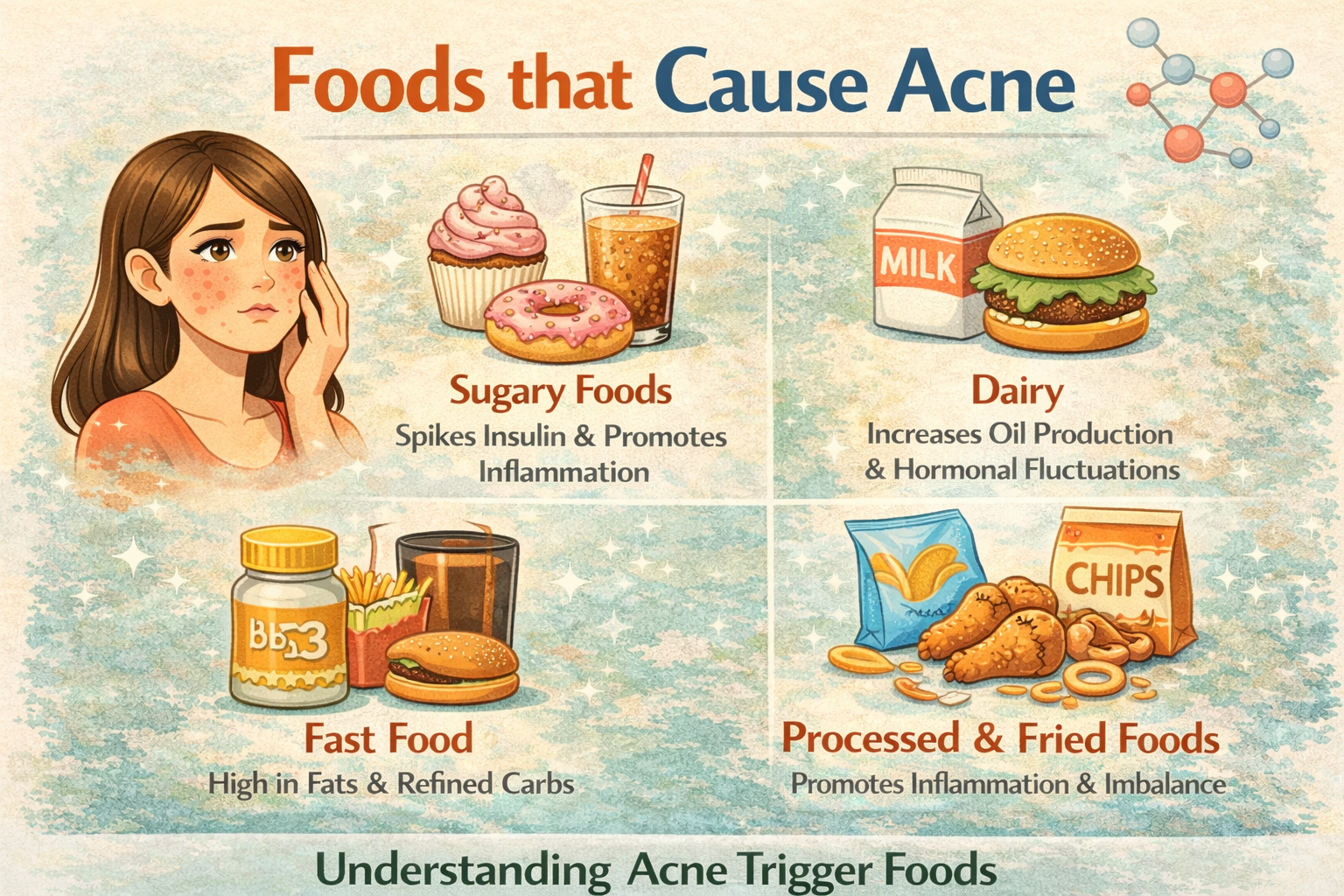
Diet is not the sole cause of acne, but for many adults, food choices can influence breakouts in meaningful ways, as certain foods may trigger or worsen acne outbreaks in susceptible individuals. Dietary habits and dietary factors play a significant role in the development and severity of acne vulgaris, the most common form of acne. Interest in foods that cause acne has grown as research has uncovered links between diet, inflammation, insulin signaling, hormones, and the gut-skin axis.
While no single food affects everyone the same way, studies suggest that a balanced diet may help manage acne. Certain dietary patterns are consistently associated with higher acne risk.
This article explains which foods are most often linked to acne, why they may contribute to breakouts, what foods support clearer skin, and how to build a realistic, evidence-based acne diet plan without extremes or unrealistic restrictions, emphasizing the importance of a balanced diet for skin health.
Key Findings on Food that Triggers Acne
- Some studies have found a correlation between milk consumption and increased acne severity (including more severe acne), particularly among young adults.
- Skim milk appears to have a stronger association with acne than whole milk.
- The link between dairy and acne is not fully understood, and more research is needed to clarify the relationship.
- Reducing dairy intake may help some individuals improve their skin, but results are not guaranteed for everyone.
- Some studies have also found that a higher body mass index (BMI) is associated with an increased risk of acne or more severe acne.
How Diet Can Influence Acne
Acne is a chronic inflammatory skin condition involving excess oil production, clogged pores, increased growth and turnover of skin cells, bacterial activity, and immune responses. Genetics, hormones, skincare habits, stress, and sleep all play roles. Diet does not override these factors, but it can interact with them. Certain foods and lifestyle factors can aggravate acne by intensifying inflammation and oil production.
Research suggests diet may influence acne through several pathways:
- Blood sugar and insulin spikes
- Insulin-like growth factor 1 (IGF-1) signaling
- Systemic inflammation
- Gut microbiome balance
- Hormonal modulation
- Stimulation of the skin’s oil glands (certain foods can stimulate the skin's oil glands, increasing oiliness and the risk of breakouts)
The immune system’s response to certain foods can also contribute to acne development by increasing inflammation and affecting how the body reacts to dietary triggers.
Importantly, most nutrition research on acne shows associations, not guaranteed cause-and-effect relationships. This explains why one person may break out after dairy while another sees no change. Diet matters most in susceptible individuals, particularly those with inflammatory acne, oily skin, or hormonal patterns.
Dairy and Acne
What the research shows
Dairy acne is one of the most studied diet-acne associations. Large observational studies and meta-analyses consistently report higher acne prevalence among individuals consuming more dairy, especially milk.
Key findings include:
- Multiple cohort studies involving tens of thousands of adolescents and adults found a positive association between milk intake and acne severity.
- Skim milk appears more strongly associated with acne than whole milk.
- Cheese and yogurt show weaker and less consistent associations.
These findings do not prove dairy causes acne universally, but they suggest dairy may be a trigger for some individuals.
Why dairy may contribute to acne
Several mechanisms are proposed:
- Dairy proteins stimulate IGF-1, which increases oil production and follicular cell growth.
- Milk contains bioactive hormones that may influence androgen signaling.
- Whey proteins in dairy can stimulate insulin release.
- Low fat dairy products, such as skim milk, may have a stronger association with acne than full-fat dairy.
Whey protein acne
Whey protein supplements, commonly used for muscle building, have been linked to acne flares in case reports and small studies. Whey is highly insulinogenic and may exacerbate acne in predisposed individuals.
Practical guidance
- Trial reducing milk and whey protein for 6–8 weeks if acne persists.
- Avoid eating certain dairy products, such as milk and whey protein, if you notice they trigger breakouts.
- Fermented dairy may be better tolerated for some.
- Focus on calcium from non-dairy sources if dairy is reduced.
Sugar, High-Glycemic Foods, and Acne
High-glycemic index acne explained
High-glycemic foods cause rapid blood sugar spikes, followed by insulin surges. Insulin increases IGF-1 activity, which promotes:
- Increased sebum production
- Faster skin cell turnover
- Greater pore clogging
Studies comparing low-glycemic and high-glycemic diets show improvements in acne severity when high-glycemic foods are reduced.
Foods commonly implicated
- Sugary drinks
- Candy and desserts
- White bread and refined grains
- Breakfast cereals with added sugar
- Pastries and baked goods
What studies show
Randomized controlled trials have demonstrated that low-glycemic diets can reduce acne lesion counts and improve insulin sensitivity within 8–12 weeks.
Evidence strength: Strong.

Processed and Ultra-Processed Foods
Why ultra-processed foods matter
Ultra-processed foods often contain:
- Refined carbohydrates
- Added sugars
- Industrial seed oils
- Artificial additives
These foods contribute to chronic low-grade inflammation, which may worsen inflammatory acne.
Examples
- Fast food
- Packaged snack foods
- Frozen meals
- Sugary cereals
- Processed meats
Rather than singling out one ingredient, research suggests overall dietary pattern matters more than individual foods.
Evidence strength: Moderate.
Inflammatory Fats and Oils
Omega-6 vs omega-3 balance
Western diets are often high in omega-6 fatty acids and low in omega-3s. Excess omega-6 intake may promote inflammation when not balanced by omega-3s.
Fats linked to acne flares
- Fried foods
- Foods cooked in industrial seed oils
- Trans fats
Fats that may help
- Fatty fish
- Olive oil
- Nuts and seeds in moderation
Balancing fat intake may help reduce inflammatory signaling associated with acne.
Evidence strength: Limited to moderate.
Food Sensitivities and Acne
Commonly suspected sensitivities
- Dairy
- Gluten
- Eggs
- Soy
Unlike true allergies, sensitivities may trigger delayed inflammatory responses that influence skin.
Elimination diet acne approach
A short-term elimination trial may help identify triggers:
- Remove suspected foods for 4–6 weeks.
- Reintroduce one food at a time.
- Monitor skin response.
Elimination diets should be temporary and structured to avoid nutritional deficiencies.
Evidence strength: Limited and individual-dependent.
Foods That Help Clear Acne
An article about foods that cause acne should also highlight foods associated with better skin outcomes.
Anti-inflammatory diet acne patterns
Dietary patterns linked to lower acne risk include:
- Mediterranean-style diets
- Diets rich in whole foods
- High fiber intake
Omega-3 acne benefits
Omega-3 fatty acids may reduce inflammatory markers and improve acne severity in some individuals.
Probiotic acne and gut health
Emerging research suggests gut microbiome balance influences skin inflammation. Probiotic-rich foods may support gut-skin communication. Green tea has also been studied for its potential to reduce acne lesions due to its anti-inflammatory properties.
Key acne-supportive foods
- Fatty fish
- Vegetables and leafy greens
- Whole grains
- Legumes
- Berries
- Nuts and seeds
What to Drink to Help Clear Acne
Hydration and skin
Adequate hydration supports skin barrier function and overall health.
Drinks that may worsen acne
- Sugary beverages
- Energy drinks
- Sweetened coffee drinks
Beverages that may help
- Water
- Unsweetened tea
- Herbal teas
Alcohol may worsen acne indirectly through inflammation and hormonal effects.
Acne Diet Plan: Simple and Realistic
Core principles
- Emphasize low-glycemic carbohydrates
- Reduce dairy and whey if sensitive
- Focus on whole, minimally processed foods
- Balance fats toward omega-3 sources
High-risk foods and swaps
|
Limit |
Swap |
|---|---|
|
Sugary cereal |
Oats with berries |
|
White bread |
Whole grain bread |
|
Whey protein |
Plant protein |
|
Soda |
Water or herbal tea |
Sample 7-Day Acne-Friendly Meal Plan (Outline)
Breakfast options
- Oatmeal with berries
- Eggs with vegetables
- Smoothie with plant protein
Lunch options
- Salmon salad
- Lentil bowl
- Chicken with quinoa
Dinner options
- Grilled fish with vegetables
- Stir-fried tofu and greens
- Turkey and roasted vegetables
Snacks
- Nuts
- Fruit
- Hummus with vegetables
This plan focuses on stable blood sugar, anti-inflammatory fats, and fiber.
Lifestyle Factors That Interact With Diet
Diet does not act in isolation. Acne outcomes are influenced by:
- Stress
- Sleep quality
- Exercise habits
- Skincare routines
Highly restrictive diets without lifestyle support rarely produce lasting skin improvements.
Common Myths About Foods and Acne
Chocolate causes acne
Chocolate itself is not proven to cause acne. Sugar and dairy content may matter more.
Greasy foods clog pores from the inside
Dietary fat does not directly clog pores. Hormonal and inflammatory pathways are involved.
One food causes acne for everyone
False. Individual responses vary widely.
Frequently Asked Questions About Foods That Cause Acne
What foods cause acne breakouts?
Foods most often associated with acne include milk, high-glycemic carbohydrates, sugary foods, whey protein, and ultra-processed foods. Individual response varies.
What foods are good for clearing acne?
Foods rich in fiber, omega-3 fats, antioxidants, and whole nutrients may support clearer skin.
What to drink to clear acne?
Water and unsweetened beverages support skin health. Sugary drinks may worsen acne.
What is the biggest trigger for acne?
High-glycemic diets and dairy are the most consistently linked dietary triggers, though hormones and genetics remain primary drivers.
Does dairy always cause acne?
No. Dairy affects some individuals more than others.
Does sugar cause acne?
High sugar intake may worsen acne through insulin and IGF-1 pathways.
Can food sensitivity cause acne?
Possibly in some individuals, though evidence is limited.
How long does diet change take to affect acne?
Most studies observe changes within 8–12 weeks.
Does eliminating foods cure acne?
No. Diet supports acne management but does not replace medical care.
Can probiotics help acne?
Emerging evidence suggests gut health may influence inflammation, but research is ongoing.
Summary and Actionable Takeaways
Foods do not cause acne in isolation, but dietary patterns can influence inflammation, hormones, and oil production in susceptible individuals. Dairy, high-glycemic foods, processed foods, and certain fats are the most consistently associated dietary triggers. At the same time, whole-food, anti-inflammatory eating patterns support overall skin health. For those exploring inside-out approaches, nutritional support strategies, including options like ClearB5, may complement a balanced acne-conscious diet.
- Learn more about Gut Health and the Acne Connection
Medical Disclaimer
This article is for informational purposes only and does not substitute professional medical advice. Always consult a qualified healthcare provider before starting supplements or changing medical treatment. These statements have not been evaluated by the Food and Drug Administration. This product is not intended to diagnose, treat, cure, or prevent any disease.


