
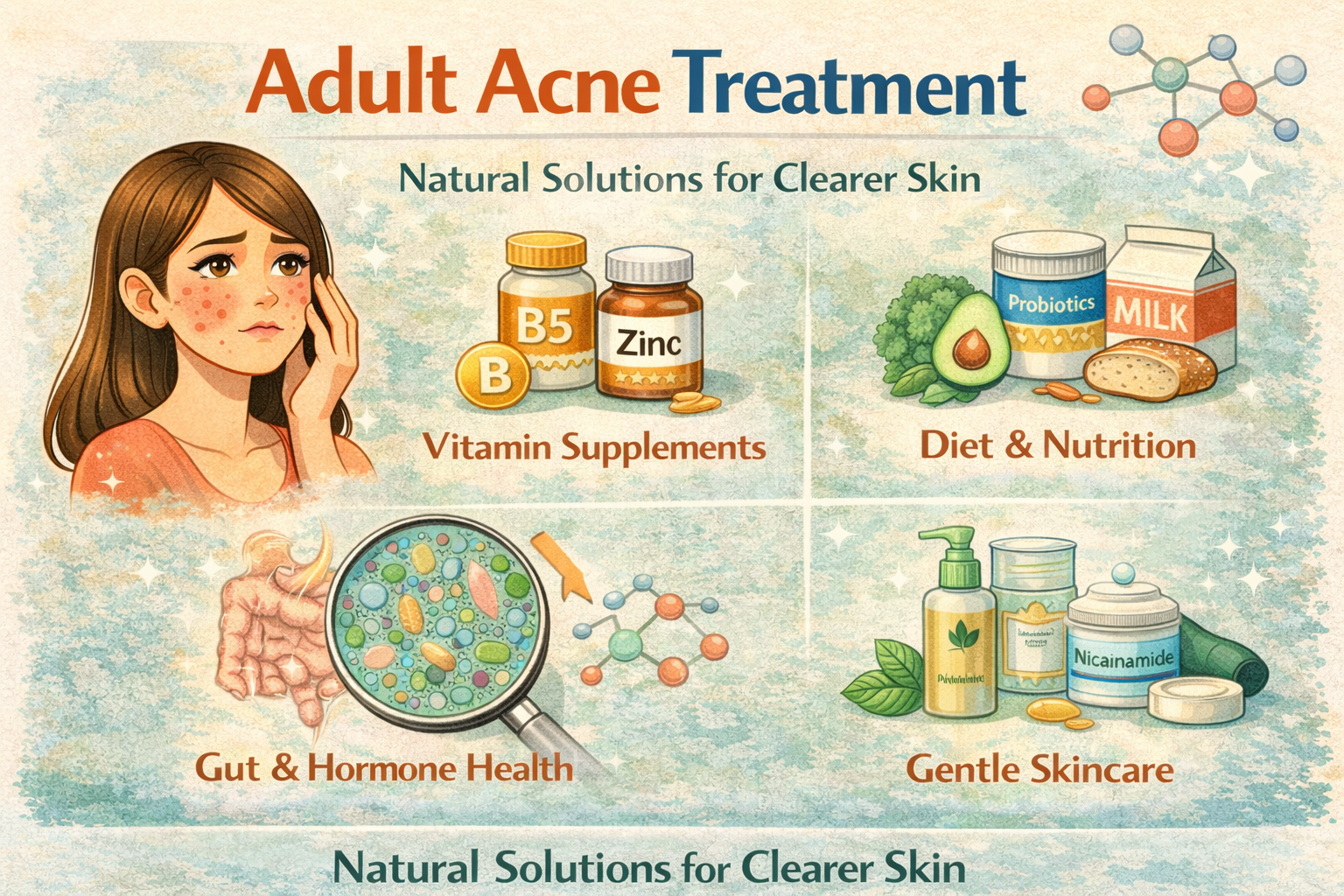
Adult acne is far more common than most people expect. Breakouts that persist into the 30s and 40s, or appear for the first time later in life, affect millions of adults of all genders. Acne occurs when clogged pores, excess oil, and hormonal changes disrupt the skin’s balance, leading to various types of blemishes. For many, prescription medications such as isotretinoin (Accutane) feel like an extreme step. As a result, interest in adult acne treatment without drugs has grown rapidly, especially approaches that focus on skin barrier health, nutrition, hormones, and sustainable routines.
This guide explains how adult acne develops, highlighting that hormonal changes and clogged pores are central to why acne occurs in adults, why it differs from teenage acne, and how evidence-based, non-drug strategies informed by dermatology research can significantly improve acne for many adults. These approaches do not promise instant results or cures, but they can support clearer skin when used consistently and realistically. This guide is for adults seeking evidence-based, drug-free solutions for persistent or late-onset acne.
Quick Action Plan: How to Treat Adult Acne Without Drugs
For adults seeking improvement without prescription medications, the most reliable strategy is consistency across several pillars:
- Follow a gentle, barrier-supportive skincare routine twice daily, as a consistent routine can help prevent acne.
- Use proven non-prescription actives such as salicylic acid, niacinamide, or azelaic acid—these ingredients are used to treat acne effectively.
- Support skin internally with evidence-backed vitamins and minerals, including zinc and vitamin B5.
- Reduce dietary patterns linked to insulin spikes and inflammation.
- Improve sleep, stress management, and exercise consistency.
- Avoid over-cleansing and aggressive exfoliation.
- Track progress over 8 to 12 weeks before changing strategies.
These steps are designed to reduce acne and prevent future breakouts, addressing the most common drivers of natural adult acne without relying on prescription drugs.
What Is Adult Acne and Late-Onset Acne?
Adult acne refers to acne that continues beyond age 25 or appears for the first time in adulthood. This condition is often classified as acne vulgaris, a common skin disorder that can persist beyond adolescence. Epidemiological studies estimate that up to 40–55% of women and a substantial proportion of men experience acne in their 30s and 40s [1]. For some individuals, acne persists well into adulthood, requiring ongoing management.
How adult acne differs from teenage acne
Adult acne tends to:
- Cluster along the jawline, chin, and lower face
- Be more inflammatory and persistent
- Flare in response to stress and hormonal shifts, often resulting in unpredictable acne flare ups
- Occur alongside increased skin sensitivity and barrier fragility
Because adult skin repairs itself more slowly, aggressive treatments that may work in adolescence often worsen adult acne.
Adult Acne Causes: Why Breakouts Happen in the 30s and 40s
Understanding adult acne causes is essential for choosing effective non-drug strategies. Multiple internal and external factors contribute to acne, including hormonal changes, excess oil production, buildup of dead skin and dead skin cells, and impaired renewal of skin cells.
In the hormones subsection, androgens stimulate oil glands and sebaceous glands, leading to oily skin and excess oil production. Increased androgen levels can also stimulate hair follicles, which in turn increases oil production and can contribute to acne.
In the lifestyle contributors subsection, certain habits can worsen acne by increasing oil production or causing too much sebum, the oily substance produced by sebaceous glands.
In the skincare triggers subsection, buildup of dead skin and dead skin cells can clog pores and contribute to acne.
In the skin barrier dysfunction subsection, impaired renewal of skin cells can make the skin more susceptible to breakouts.
Hormones and adult acne
Androgens, estrogen fluctuations, cortisol, and insulin all influence oil production and inflammation. Even when blood hormone levels are normal, increased sensitivity at the skin level can trigger breakouts. Hormonal acne is common during menstrual cycles, perimenopause, and periods of chronic stress [2].
While oral contraceptives are sometimes prescribed for hormonal acne due to their ability to regulate hormones, this article focuses on non-drug alternatives.
Skin barrier dysfunction
Adult skin produces fewer lipids and recovers more slowly from irritation. Barrier damage increases inflammation, makes the skin more prone to skin irritation, allows greater bacterial penetration, and contributes to acne persistence.
Lifestyle contributors
- Chronic stress elevates cortisol, worsening inflammation
- Poor sleep disrupts hormonal regulation and can make individuals more prone to sensitive skin
- Diets high in refined carbohydrates increase insulin and IGF-1 signaling
Skincare and cosmetic triggers
Choosing the wrong acne product can exacerbate breakouts. Over-exfoliation, harsh cleansers, fragranced products, and heavy occlusives can also worsen acne rather than improve it.
Natural Adult Acne Treatment Options (Evidence-Based)
“Natural” does not mean unproven. Many non-drug approaches are supported by clinical dermatology research.
Examples of natural remedies with evidence include green tea, tea tree oil, and apple cider vinegar. These ingredients are often highlighted for their anti-inflammatory properties, which can help reduce redness and swelling associated with acne.
Some natural ingredients, like tea tree oil, work by killing acne-causing bacteria and reducing inflammation. Green tea and apple cider vinegar are also used for their potential to kill bacteria and support overall skin health.
Topical Non-Prescription Acne Treatments for Adults
Salicylic acid
Salicylic acid is a beta-hydroxy acid that is effective at clearing clogged pores, which are a primary cause of acne. It penetrates pores and reduces follicular blockage. It is particularly helpful for blackheads and whiteheads. Concentrations of 0.5–2% are commonly recommended for adult acne and are generally well tolerated when used correctly [3].
Niacinamide (Vitamin B3)
Niacinamide reduces inflammation, improves barrier function, and helps regulate sebum production. Randomized controlled trials show niacinamide can reduce inflammatory acne lesions and oiliness while improving skin tolerance to other actives [4]. Niacinamide can also help improve uneven skin tone, making it a valuable ingredient for those seeking adult acne treatment without drugs.
Azelaic acid
Azelaic acid has anti-inflammatory and antibacterial properties and can help with both acne and post-inflammatory discoloration. It is often recommended for sensitive or adult skin types [5]. With regular use, azelaic acid can also contribute to smoother skin over time.
Benzoyl peroxide (low strength)
Low-strength benzoyl peroxide (2.5%) reduces acne-causing bacteria with less irritation than higher concentrations. It is best used as a spot treatment in adult routines [6], and using benzoyl peroxide as a spot treatment can help prevent acne breakouts before they worsen.
These ingredients are widely considered effective non-prescription acne medication for adults.
Retinol alternative
A retinol alternative (such as bakuchiol, a plant-based ingredient with similar effects) can be used in place of traditional retinol for those seeking gentler options with comparable benefits for skin renewal and acne management.
Best Skincare Routine for Adult Acne
Consistency and simplicity matter more than product quantity.
Morning routine
- Gentle, non-foaming cleanser
- Niacinamide or azelaic acid serum
- Lightweight, non-comedogenic moisturizer (non-comedogenic means it does not clog pores)
- Broad-spectrum sunscreen
Evening routine
- Cleanser
- Salicylic acid or retinol alternative (2–4 nights per week)
- Moisturizer
Over-cleansing or stacking too many actives damages the barrier and worsens adult acne.
Adult Acne Vitamins and Nutritional Support (Evidence-Based)
Nutrition does not replace topical care, but it influences inflammation, oil production, healing, and the development of new skin cells. Certain nutrients support the regeneration of new skin cells, which is important for healing and preventing clogged pores. Research suggests several micronutrients are particularly relevant to adult acne treatment without drugs.
Zinc
Zinc is one of the most studied minerals for acne. It supports immune function, wound healing, and inflammatory regulation. Clinical trials and reviews show zinc supplementation can reduce inflammatory acne lesions and overall acne severity in some adults, especially those with low baseline zinc levels [7][8].
Typical supplemental ranges used in studies fall between 15–30 mg of elemental zinc per day, taken with food to reduce gastrointestinal discomfort.
Vitamin B5 (Pantothenic Acid)
Vitamin B5 plays a central role in lipid metabolism through its involvement in coenzyme A production. Coenzyme A is essential for breaking down fatty acids, including sebum. Excess sebum is a key contributor to acne, particularly in adult and hormonal acne patterns.
A randomized, double-blind, placebo-controlled clinical trial found that oral pantothenic acid supplementation significantly reduced acne lesion counts compared to placebo over a 12-week period [9]. Additional evidence suggests that individuals with acne may have increased metabolic demand for vitamin B5 due to higher rates of oil production [10].
Vitamin B5 is generally well tolerated at doses used for skin support and does not require laboratory monitoring when used responsibly. For adults seeking acne without Accutane, vitamin B5 is often included as part of a broader nutritional strategy.
Vitamin D
Observational studies have found lower vitamin D levels in individuals with more severe acne. Vitamin D plays a role in immune modulation and inflammatory balance, both relevant to acne pathophysiology [11].
Omega-3 Fatty Acids
Omega-3 fatty acids, particularly EPA and DHA, reduce systemic inflammation. Small clinical trials suggest omega-3 supplementation can reduce inflammatory acne lesions and improve overall acne severity [12].
Vitamin A Precursors
Vitamin A regulates skin cell turnover, but high-dose supplementation carries safety risks. Dietary vitamin A precursors are preferred unless supplementation is supervised by a healthcare professional [13].
Comprehensive Vitamin Support
Because adult acne is multifactorial, some individuals prefer a comprehensive approach rather than single-nutrient supplementation. Formulations such as ClearB5 combine vitamin B5 with zinc and complementary nutrients designed to support acne from an inside-out perspective. These approaches are intended to complement topical care and lifestyle changes, not replace medical treatment.
Dietary Patterns That Influence Adult Acne
-
Low-glycemic eating
Low-glycemic diets reduce insulin spikes and IGF-1 signaling, both linked to acne severity. Randomized trials show improvements in acne lesion counts after 8–12 weeks on low-glycemic diets [14]. -
Dairy considerations
Milk and whey protein are associated with acne in some adults, likely due to hormonal and insulinogenic effects. Sensitivity varies, and elimination is not universally required [15]. -
Anti-inflammatory diet patterns
Mediterranean-style diets rich in vegetables, fiber, fish, and olive oil are associated with lower inflammatory markers and better skin outcomes [16].
Hormones and Adult Acne Without Drugs
Hormonal acne does not always require medication.
Lifestyle-based hormone support
- Stress reduction lowers cortisol signaling
- Regular exercise improves insulin sensitivity
- Consistent sleep supports hormonal regulation
Nutritional support
Zinc, vitamin B5, omega-3s, and vitamin D may support inflammatory balance during hormonal fluctuations.
How to Get Rid of Adult Acne ASAP (Realistic Expectations)
There is no instant solution, but early improvement often comes from:
- Reducing irritation and over-treatment
- Using one proven active consistently
- Improving sleep and hydration
Most non-drug approaches require 8–12 weeks for meaningful improvement.
7-Day, 30-Day, and 90-Day Adult Acne Plans
7-Day Reset
- Simplify skincare
- Remove known irritants
- Prioritize sleep and hydration
30-Day Stabilization
- Introduce one targeted active
- Maintain consistent routine
- Reduce high-glycemic foods
90-Day Optimization
- Assess progress
- Adjust actives or supplements
- Continue lifestyle and nutritional support
Common Myths About Natural Adult Acne Treatment
“Natural remedies kill acne instantly”
False. Evidence-based natural approaches reduce inflammation and support skin over time.
“Drying out acne clears it faster”
Over-drying damages the barrier and worsens adult acne.
“Adult acne means poor hygiene”
Acne is not caused by dirt or lack of cleanliness.
When to See a Dermatologist
Professional evaluation is recommended if:
- Acne is severe or scarring
- No improvement after 12 weeks
- Painful cysts develop
- Acne significantly affects quality of life
Drug-free strategies can coexist with professional care.
Frequently Asked Questions
How to treat adult acne without drugs?
Use a gentle routine, proven non-prescription actives, targeted nutrition including vitamin B5 and zinc, and consistent lifestyle habits. Improvement typically takes weeks.
What is the best non-prescription acne medication for adults?
Salicylic acid, niacinamide, azelaic acid, and low-strength benzoyl peroxide have the strongest evidence.
Can vitamins really help adult acne?
Certain nutrients support inflammation control and oil metabolism, particularly zinc and vitamin B5.
Is acne in the 30s and 40s normal?
Yes. Adult acne is common and influenced by hormones, stress, and lifestyle.
Can acne be treated without Accutane?
Many mild to moderate cases improve without Accutane using consistent non-drug strategies.
How long does natural adult acne treatment take?
Most approaches require 8–12 weeks for visible improvement.
Does stress cause adult acne?
Stress does not directly cause acne but worsens inflammatory and hormonal signaling.
Is adult acne permanent?
No. With the right approach, adult acne is manageable for most individuals.
Conclusion
Adult acne reflects complex interactions between hormones, inflammation, lifestyle, and skin barrier health. For many individuals, adult acne treatment without drugs is both realistic and effective when approached systematically. Gentle topical actives, consistent routines, targeted nutritional support including vitamin B5, and lifestyle optimization form the foundation of sustainable acne management. These approaches require patience, but they align with long-term skin health rather than short-term suppression.
- Learn more about Vitamins for Hormonal Acne
References
- Collier CN et al. Prevalence of acne in adults. J Am Acad Dermatol.
- Zaenglein AL et al. Guidelines of care for acne vulgaris. J Am Acad Dermatol.
- Kligman AM. Topical salicylic acid in acne.
- Draelos ZD et al. Niacinamide and acne. Dermatol Surg.
- Thiboutot D et al. Azelaic acid in acne.
- Del Rosso JQ. Benzoyl peroxide use in adult acne.
- Dreno B et al. Zinc salts for acne. Dermatology.
- Ozuguz P et al. Serum zinc levels in acne. Biol Trace Elem Res.
- Yang Z et al. Oral pantothenic acid supplementation in acne. Dermatol Ther.
- Patel M et al. Pantothenic acid and lipid metabolism.
- Lim SK et al. Vitamin D deficiency and acne. PLoS One.
- Jung JY et al. Omega-3 fatty acids and acne. Acta Derm Venereol.
- NIH Office of Dietary Supplements. Vitamin A Fact Sheet.
- Smith RN et al. Low-glycemic diet and acne. Am J Clin Nutr.
- Adebamowo CA et al. Dairy intake and acne. J Am Acad Dermatol.
- Barrea L et al. Mediterranean diet and acne. Clin Nutr.
Medical Disclaimer
This article is for informational purposes only and does not substitute professional medical advice. Always consult a qualified healthcare provider before starting supplements or changing medical treatment. These statements have not been evaluated by the Food and Drug Administration. This product is not intended to diagnose, treat, cure, or prevent any disease.


